PROFI-LOG telemedicine that makes sense
Catalogue PDF

PROFI-LOG

More than measurement. Real care.

Medical and assistive technology that is easy to deploy and high in functional value.

PROFI-LOG licences, measuring devices and communication hardware in a single solution. Readings travel automatically into the provider's information system – no retyping, no paper. Offer for: Outpatient monitoring and examinations, Residential social services, Home care.

devices to buy or rent customisation and branding MD medical device under MDR (EU) 2017/745

Technology for a better future

Integrated systems
CygnusEquipCordisCODUSPREUSDP2013Chytrá organizaceDODSMediCalcIKISFONS GalenPROFI-LOG

Software and licences

billed monthly, semi-annually or annually
PROFI-LOG software licence Collection of data from measuring devices, its evaluation and automatic entry into the provider's information system. The licence covers one site installation, including updates and HelpDesk support.
Licence price PROFI 92 € + VAT / month
Licence price HOME 21 € + VAT / month
Optional functions for the licence

10-minute measurement windows

4 € / licence / month
×

Examination

6 € / licence / month
×

Caregiver dashboard

200 € / month flat
×
Description of the problem and solution

CZK 4,800 / month regardless of the number of licences

Medical platform operation

242 € / month flat
×

ClickBox interface operation

17 € / licence / month
×
blood glucoseblood pressuretemperaturepulseSpO2communicationGPS
Recommended

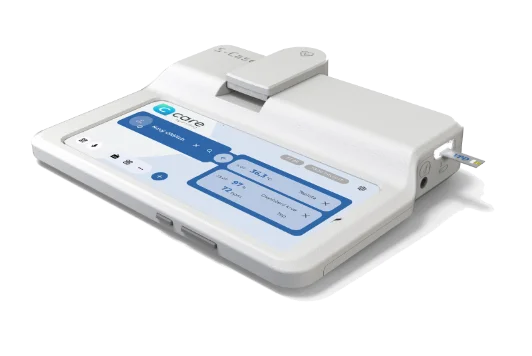
S-CASE: All-in-one Medical Hub

S-Case · PROFI-LOG extension (CCARE)

All measuring devices in one. It measures glucose, blood pressure, temperature, pulse and oxygen saturation. Results are saved instantly and automatically to the client's system – one device instead of a whole set of instruments, fast and accurate measurement, instant error-free data transfer.

What it measures and does

SpO2, pulse, blood pressure, blood glucose, temperature – all in one device; readings are sent to PROFI-LOG.

Operator requirements
Operation requires brief training, no certification needed
Blood glucose tests only by a trained nurse authorised to take capillary blood samples
Optimal number: 2 devices per nurses' station
Medical device, safety class IIb
purchase 1,040 €rental 106 € / month
Consumables and service
Lancets 25 pcs 5 € / pack
Blood glucose strips 25 pcs 6 € / pack
Cuff L 17 € / 1 pc
Cuff XL 19 € / 1 pc
Continuous diagnostics and dispatch centre 21 € / month / S-CASE
Safety inspection (every 2 years) 134 € / inspection

ANUME smart mats

Partner · Anumefall and pressure-ulcer prevention
ANUME smart mats fall and pressure-ulcer prevention 1 devices
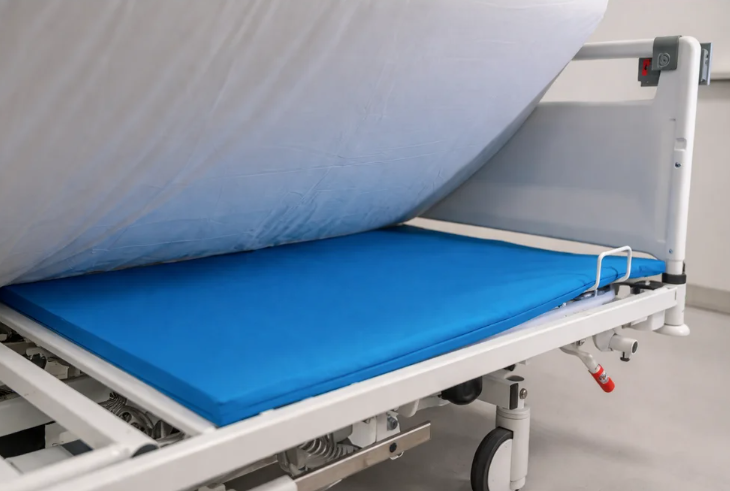
Contactless under-mattress sensor mat for fall and pressure-ulcer prevention

Anume mat

Night bed checks cost staff time and wake clients, yet a fall on leaving the bed or neglected repositioning is revealed only by its consequences. The Anume mat goes under the mattress and, from the body's micro-movements (ballistography), continuously tracks whether the client is lying down, how they move and when they left the bed. Measurement is continuous, 24 hours a day, with nothing on the client's body. The system raises a bed-exit alarm, reminds staff when repositioning is due and records when it was done – so there is evidence of the quality of care. From the micro-movements it also derives heart rate, respiratory rate and sleep cycles. Unlike the other devices on offer it is the only solution the client does not operate and that monitors several beds from one place. It suits hospital wards, residential care and home care of bedridden patients.

What it measures and does

Continuous monitoring of bed presence, movement and repositioning, heart and respiratory rate and sleep cycles from micro-movements sensed under the mattress. Bed-exit alarm, repositioning reminders, log of repositioning performed and an overview of several beds from one place. Data are transferred automatically to PROFI-LOG and stored in the patient record. The device is not intended for diagnosis.
Operator requirements
— The client operates nothing.
— Staff place the mat under the mattress, assign the client and set the alarms; training is part of the delivery.
— Connection via LTE or LAN, mains powered.
purchase 1,660 €rental 104 € / month
Consumables and operation
Operation 1 month 33 € / month

eHelper assistive technology

Partner · eHelperkits and watches for home care
eHelper assistive technology kits and watches for home care 3 devices
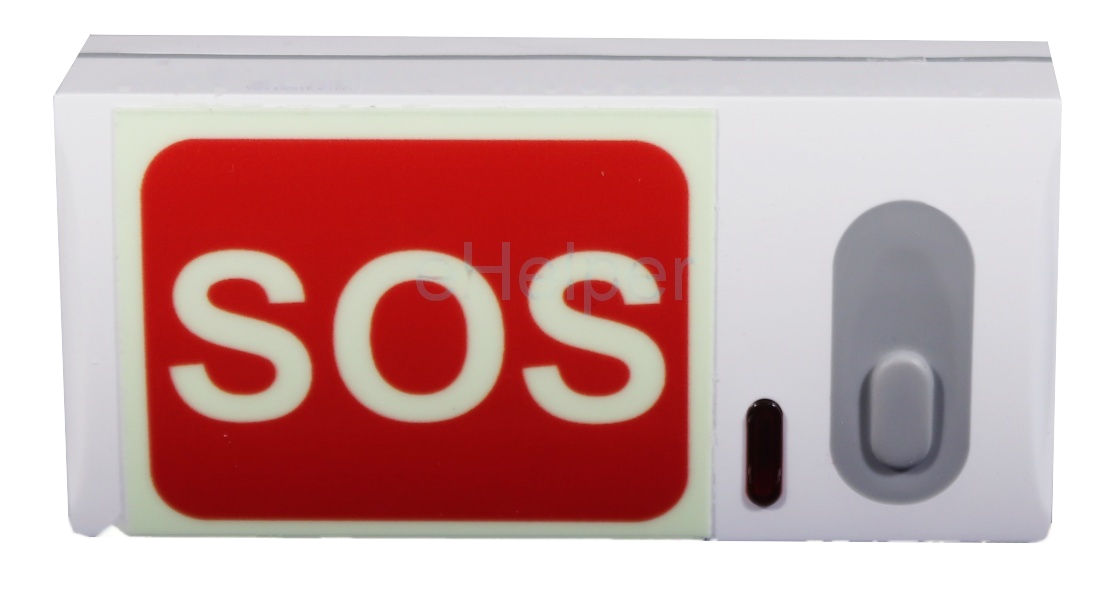
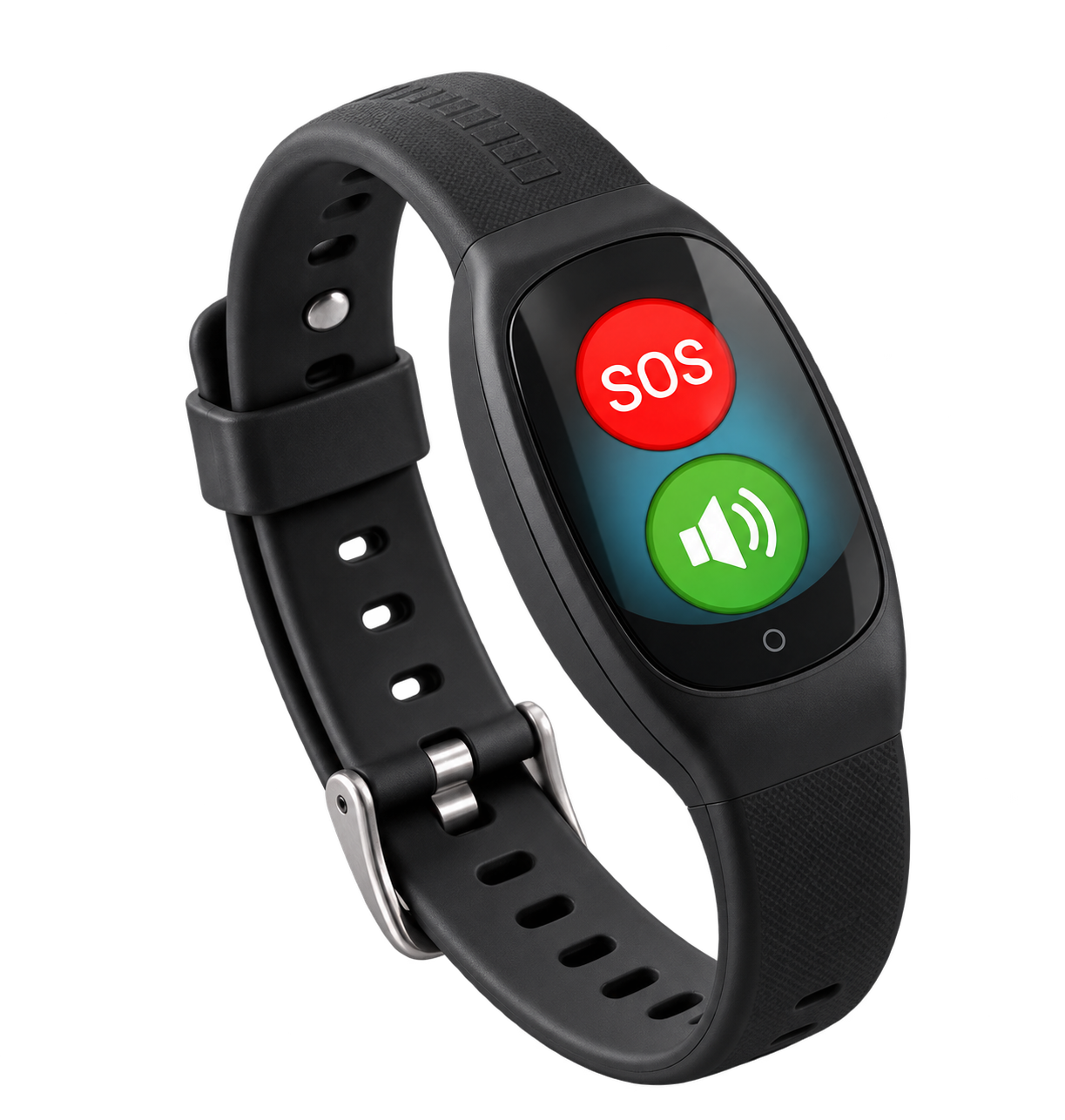
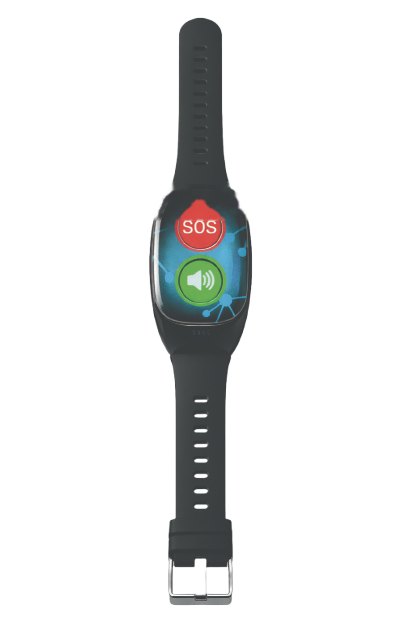
Smart SOS wristband with call for help, fall detection and location

eHelper wristband

A senior living alone or going out needs a way to call for help after a fall or when feeling unwell – and the family needs to know where they are. The eHelper wristband has an SOS button with call-back and its own SIM card, so it works as an intercom without a phone, detects falls and shows in the app the area where the person currently is. It also measures blood pressure, pulse and oxygen saturation. Measurement is continuous – the band is worn 24 hours a day. It works only together with an eHelper control unit (HOME, PROFI or INDIVIDUÁL kit), not on its own. Unlike the eHelper kits, which watch the home, the band watches the person directly – outside the home too. It suits home care, residential care and field services.
What it measures and does

SOS call with call-back via its own SIM, fall detection, GPS location (area where the person is), measurement of blood pressure, pulse and oxygen saturation. Events and values are transferred automatically to PROFI-LOG and stored in the patient record.
Operator requirements
— Worn by the client on the wrist; in an emergency they press one button.
— Requires an eHelper control unit and contact persons set in the app by a carer or family.
Certification

Not a medical device within the meaning of Regulation (EU) 2017/745; intended to support safety.

purchase 123 €rental 13 € / month
Home electronic-care kit that watches a senior's flat without wearing anything

eHelper HOME kit

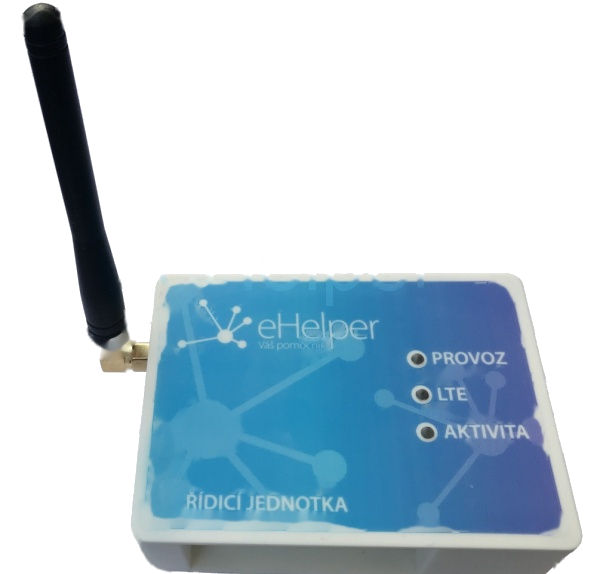
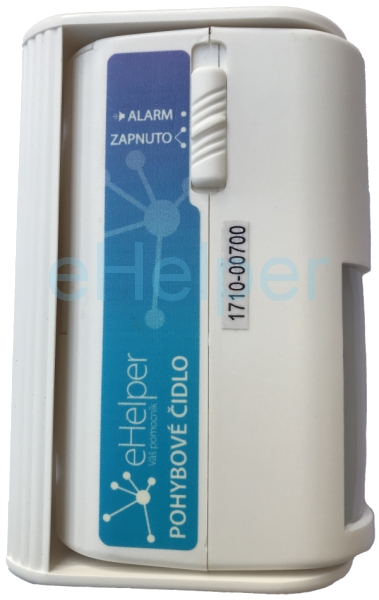
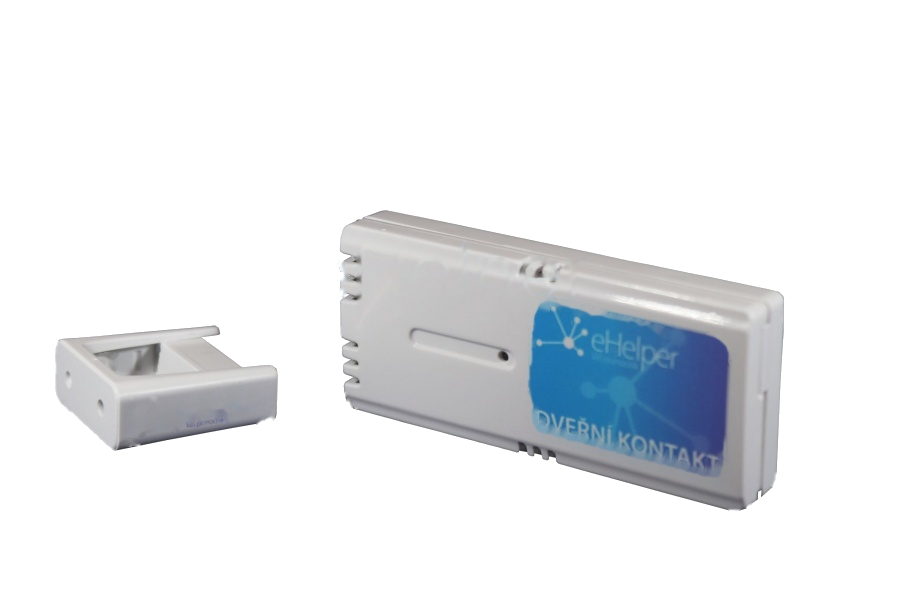
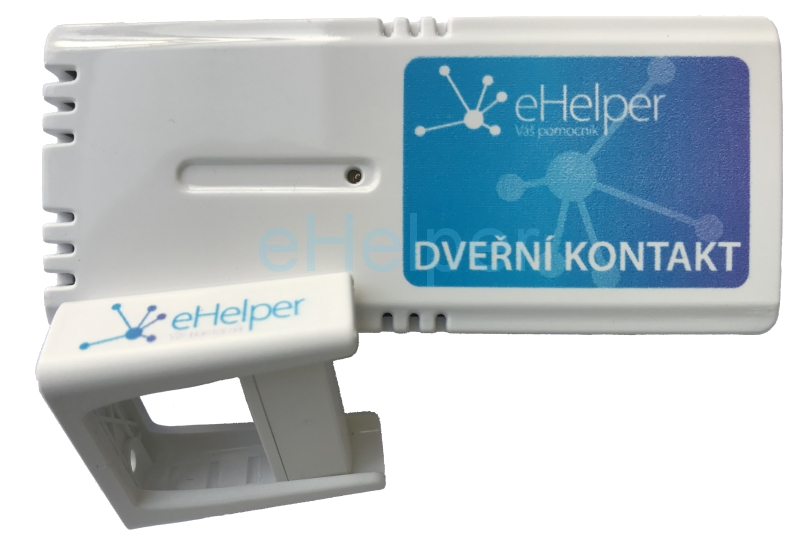
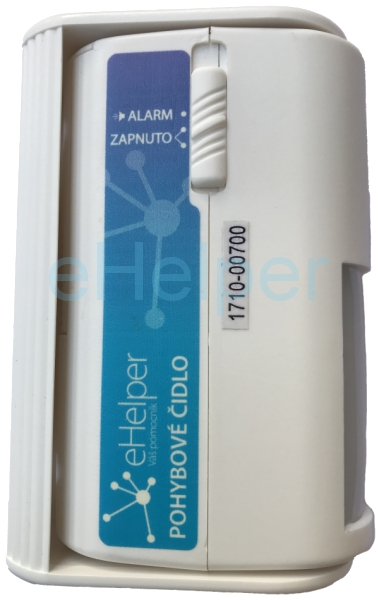
The family of a working person cannot be with a lonely parent all day, yet needs to know they are all right. The eHelper HOME kit is installed in the flat: a control unit with its own internet, motion sensors, a door contact and an emergency button follow the normal daily routine – when the senior gets up, when they move around, whether they went out and came back. Monitoring is continuous, 24 hours a day, and the senior wears nothing. The system learns behaviour patterns by itself and, in an unusual situation such as long inactivity, sends the family or carer a notification or SMS. Unlike the eHelper wristband it watches the space, not the person; unlike the PROFI kit it is intended for one household. It suits home care and sheltered housing.

What it measures and does

Continuous monitoring of movement and presence in the flat, door opening and the emergency button, with automatic learning of the normal routine and alerts on deviations (inactivity, not returning home). Events are transferred automatically to PROFI-LOG and stored in the patient record.

Operator requirements
— The senior operates nothing, only presses the button in an emergency.
— Installation and setting of contact persons in the app is done by the family or carer; the system can be extended with a wristband or cameras.
— Mains-powered control unit with its own LTE connection.
Certification

Not a medical device within the meaning of Regulation (EU) 2017/745; intended to support safety.

purchase 704 €rental 29 € / month
Professional electronic-care kit for social service providers

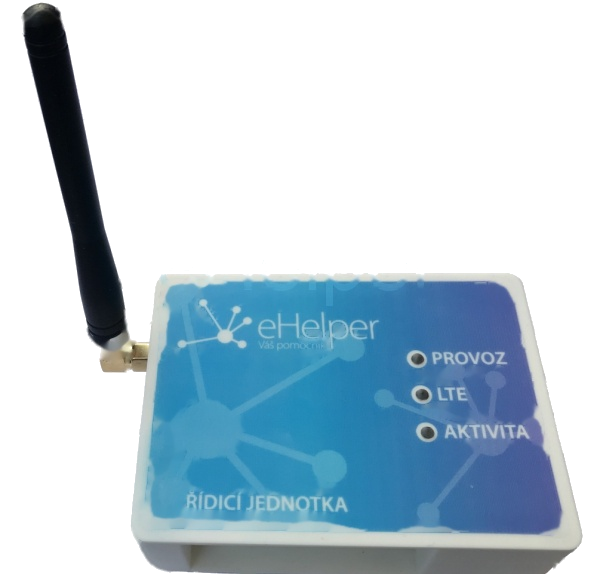
eHelper PROFI kit

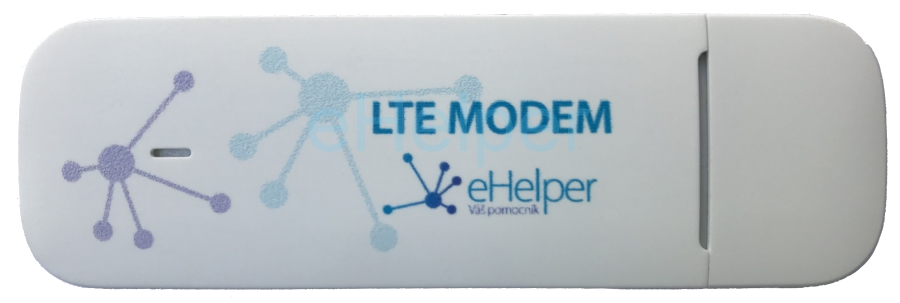
A home-care service or sheltered housing has dozens of clients and staff cannot be with each one; yet it must prove that it cares for clients and reacts in time. The eHelper PROFI kit brings the same principle as the home kit – a control unit with LTE modem, motion sensors and a door contact follow the client's routine continuously, without wearing anything – but it is intended for organisations that manage many clients in one app and provide 24/7 supervision as part of the service. Monitoring is continuous. The system learns the client's habits and alerts staff on deviation. Unlike the HOME kit it is built for an organisation's operation, not a family's; unlike the Anume mat it watches the whole flat, not just the bed. It suits residential care, field home-care services and sheltered flats.

What it measures and does

Continuous monitoring of the client's movement and presence in the flat and of door opening, with automatic learning of the normal routine and staff alerts on deviations. Events are transferred automatically to PROFI-LOG and stored in the patient record.

Operator requirements
— The client operates nothing.
— Installation, setup and supervision are provided by the provider's staff in the app; the system can be extended with a wristband, emergency buttons or cameras.
— Mains-powered control unit, connectivity via LTE modem.
Certification

Not a medical device within the meaning of Regulation (EU) 2017/745; intended to support safety.

purchase 1,007 €rental 29 € / month

Devices and instruments

every item can be bought or rented · expand a measurement chapter
ECG episodic and 12-lead measurement 3 devices
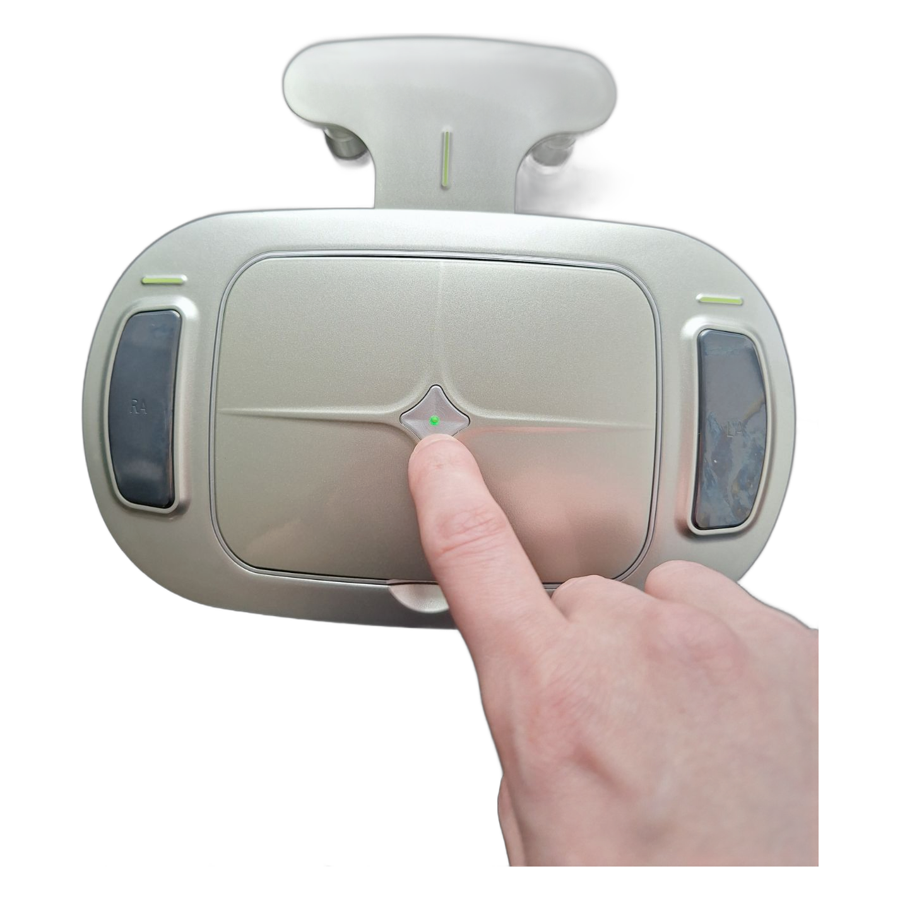
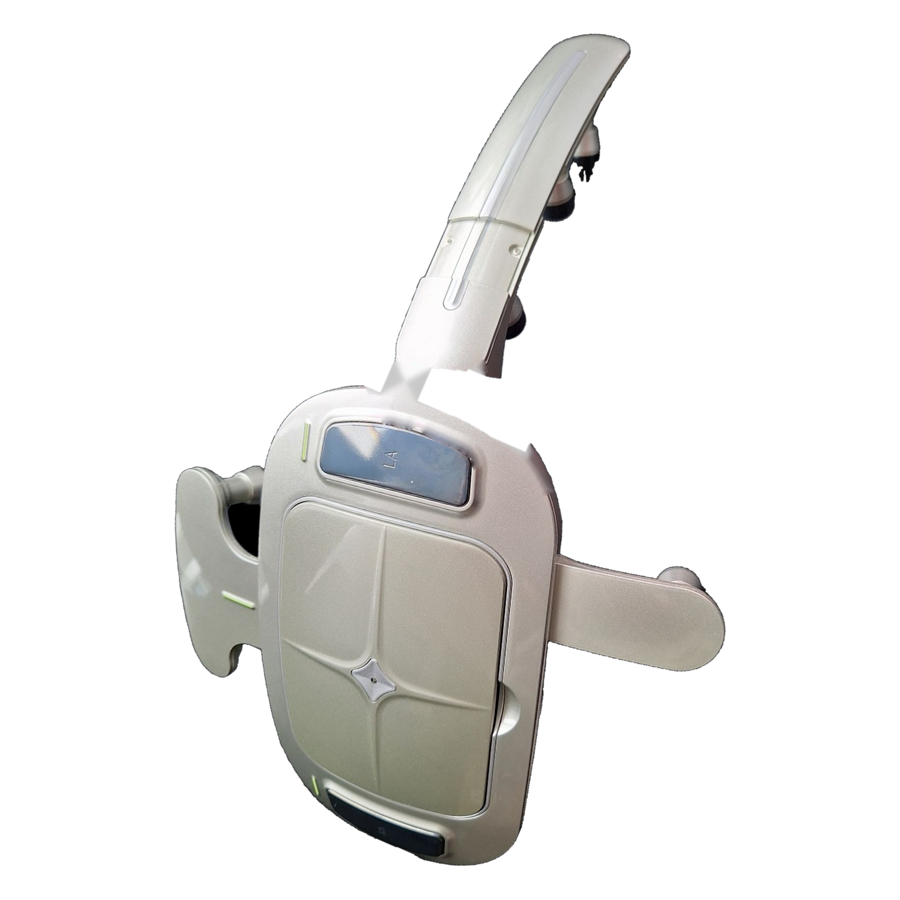
Pocket 6-lead ECG for capturing arrhythmias anytime, anywhere

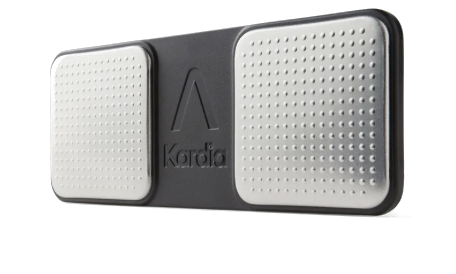
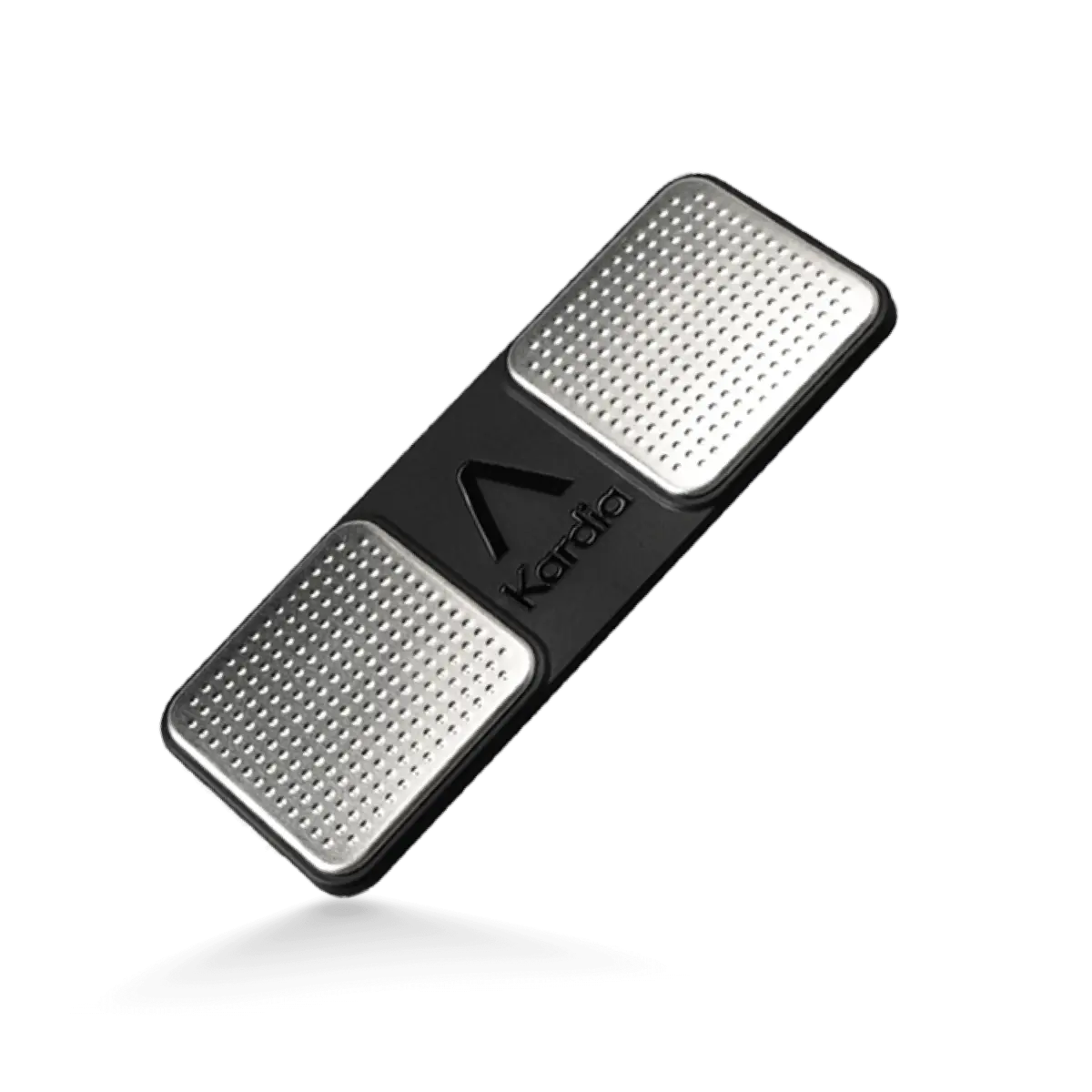
ECG AliveCor Kardia Mobile 6L

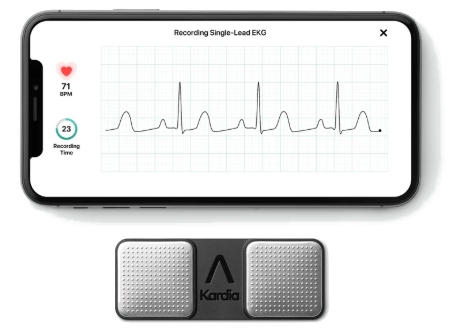
In patients with suspected arrhythmia or episodic symptoms, the ECG must be captured at the moment the symptoms occur. KardiaMobile 6L is a small pad with no cables or electrodes: the patient places the thumbs on the top electrodes, rests the bottom one on a bare knee or ankle, and after 30 seconds has a 6-lead recording equivalent, for rhythm assessment, to the limb leads of a hospital ECG. Measurement is episodic. Of the three models in this section it is the smallest, lightest and simplest to operate. It records limb leads only and therefore serves to capture arrhythmias; assessing ischaemia requires the chest leads of HeartPal or D-Heart. It suits patients at home and field services wherever regular rhythm monitoring is needed.

What it measures and does

Single-lead (I) or 6-lead ECG (I, II, III, aVR, aVL, aVF), recording 30 s to 5 min. The manufacturer's analysis recognises sinus rhythm, atrial fibrillation, bradycardia and tachycardia; advanced determinations (PVCs, wide QRS, SVE) are a paid service. The recording is transferred via Bluetooth to PROFI-LOG and stored in the patient record.

Operator requirements
— Can be operated by the patient, a carer or a nurse; interpretation is for the physician.
— No cables, gel or adhesives – bare skin on the fingers and left leg and a phone with the app are enough.
— The replaceable CR2016 coin cell lasts about 12 months of typical use.
— Not intended for patients with a pacemaker or ICD, nor for children.
Certification

CE-marked medical device (EU representative Obelis s.a., Brussels), FDA 510(k). Type CF applied parts, IP22.

Dimensions, weight

90 × 30 × 7.2 mm, 24 g.

purchase 228 €rental 22 € / monthoperation 14 € / month
Consumables and operation
ECG AliveCor AI operation 11 €
Handheld 12-lead ECG – no cables, usable by non-clinicians

ECG Baheal HeartPal E-10

A full 12-lead ECG used to mean a device with cables, adhesive electrodes and trained staff. HeartPal E-10 has all electrodes built into the device body: it is placed on the chest, the patient holds it with the palms on the side electrodes, and the recording is complete in about 12–15 s. Measurement is episodic and controlled from the phone app; the device has no display. Unlike KardiaMobile 6L, which records limb leads only, its chest leads also capture signs of ischaemia and myocardial infarction. Unlike D-Heart 8/12, no electrodes need to be attached. The manufacturer intends it for home use and lay operators as well as for professionals who need a fast, compact solution. It serves from screening of seniors in residential care, through field services, to an emergency device at a cardiac patient's home. Its main advantages are speed, simplicity and a light plastic body.

What it measures and does

Resting 12-lead ECG recorded by built-in electrodes without cables. Captures arrhythmias and rhythm disorders, signs of myocardial ischaemia including its location, and myocardial infarction. The recording is sent wirelessly to the PROFI-LOG application, displayed as 12 traces and stored in the patient record.

Operator requirements
— Lay operator or professional.
— The patient bares the chest and removes metal jewellery; the device contacts and the skin are moistened with a wet wipe or conductive gel.
— The operator applies the device using the alignment marks and starts the measurement in the phone app – no cables or adhesives.
— With dense chest hair, use more gel or trim the hair.
— Powered by a built-in rechargeable battery, charged via USB-C.
Certification

Medical device.

purchase 1,040 €rental 125 € / month
Consumables and operation
Safety inspection after 2 years of operation 204 € / inspection
Pocket 8/12-lead ECG with standard electrodes

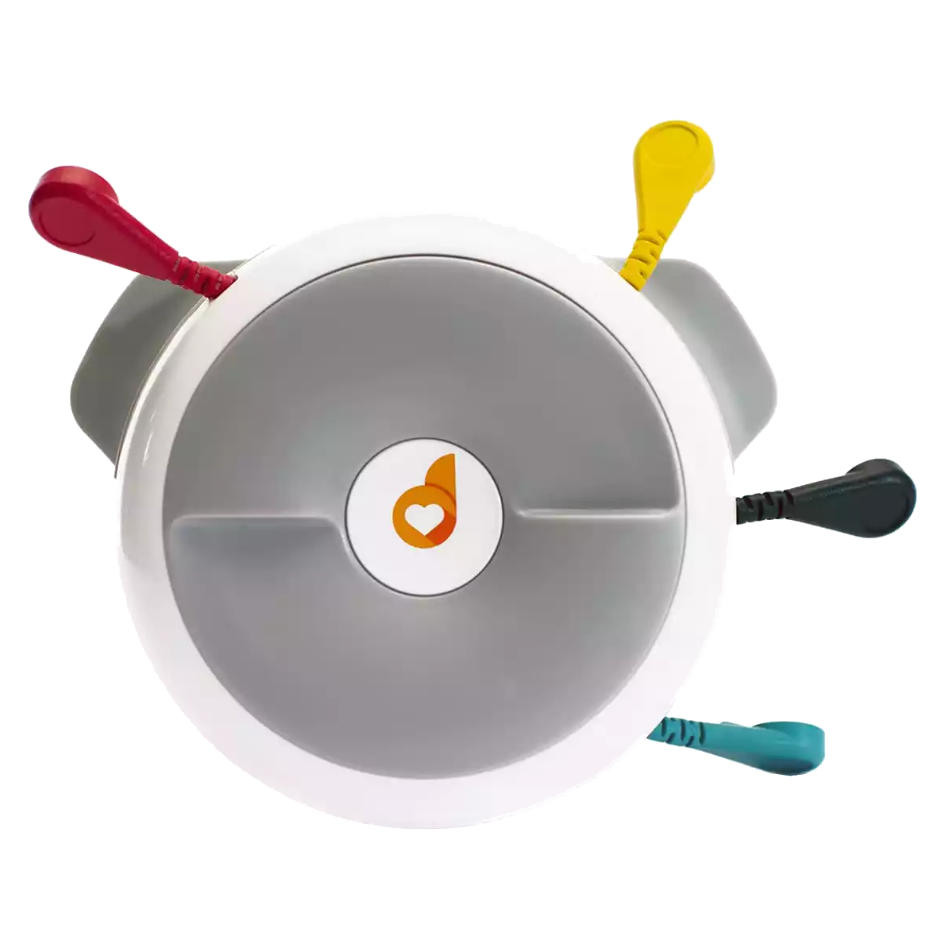
ECG D-Heart 8/12

D-Heart replaces a conventional electrocardiograph wherever a full ECG with chest leads is needed in pocket format. The device hangs around the patient's neck, six disposable electrodes are attached to the chest – the app uses the phone camera to show exactly where – and the recording is complete in 12 seconds. Measurement is episodic. Unlike HeartPal it requires attaching electrodes, but thanks to standard placement it delivers, in professional mode, all twelve leads in the same form as a hospital ECG, allows longer recordings and export to a standard format. Unlike KardiaMobile it also captures ischaemia. The manufacturer intends it for hospitals, general practices and home care: in patient mode it records 8 leads automatically, in professional mode 12.

What it measures and does

8 leads (I, II, III, aVR, aVL, aVF, V2, V5) in patient mode with 12–60 s recording; 12 leads (plus V1, V3, V4, V6) in professional mode with 12 s recording. The app checks electrode contact before starting and shows traces and heart rate during the measurement. The recording is transferred via Bluetooth to PROFI-LOG and stored in the patient record; it can be exported as PDF or SCP.

Operator requirements
— Patient or carer in patient mode, healthcare professional in professional mode.
— Requires disposable adhesive electrodes (6 per measurement) and bare chest skin; placement is guided by the app using the phone camera.
— Built-in Li-ion battery with wireless charging in the case, at least 24 h operation, 90 % charge in 2 h.
— Intended for adults.
Certification

Class IIa medical device, CE 1370 (Bureau Veritas Italia) under Directive 93/42/EEC; IP22.

Dimensions, weight

117 × 133 × 44 mm, 196 g.

purchase 1,040 €rental 125 € / month
Basic measurement blood pressure, saturation, temperature 7 devices
Upper-arm blood pressure monitor with smart cuff for home and clinic

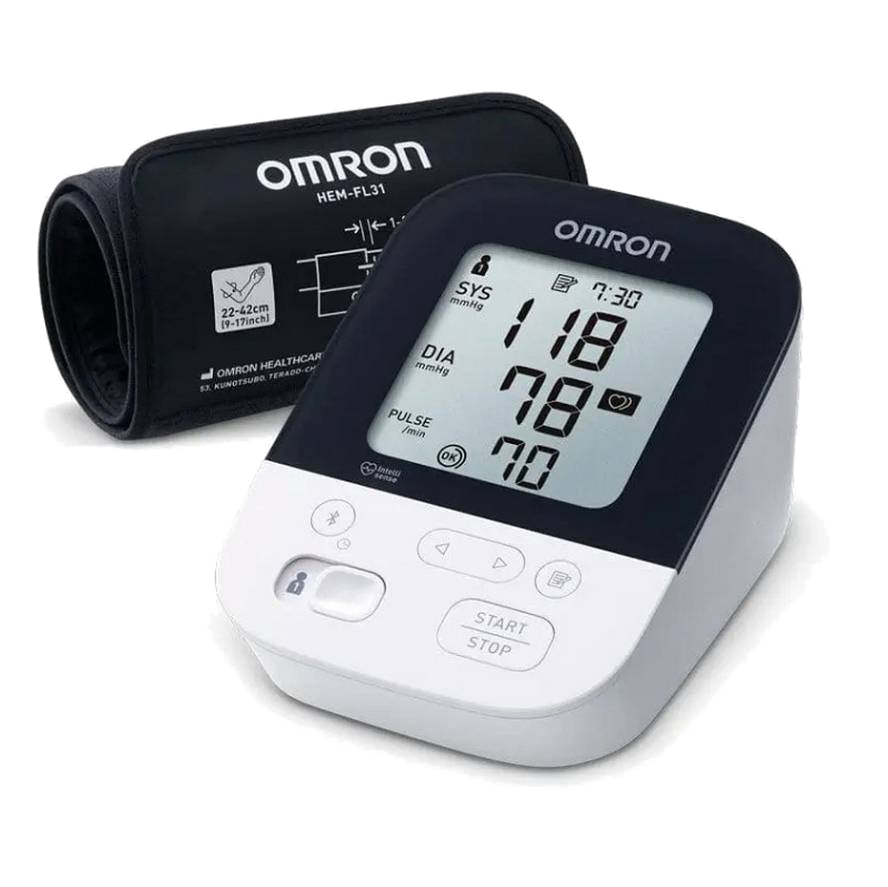
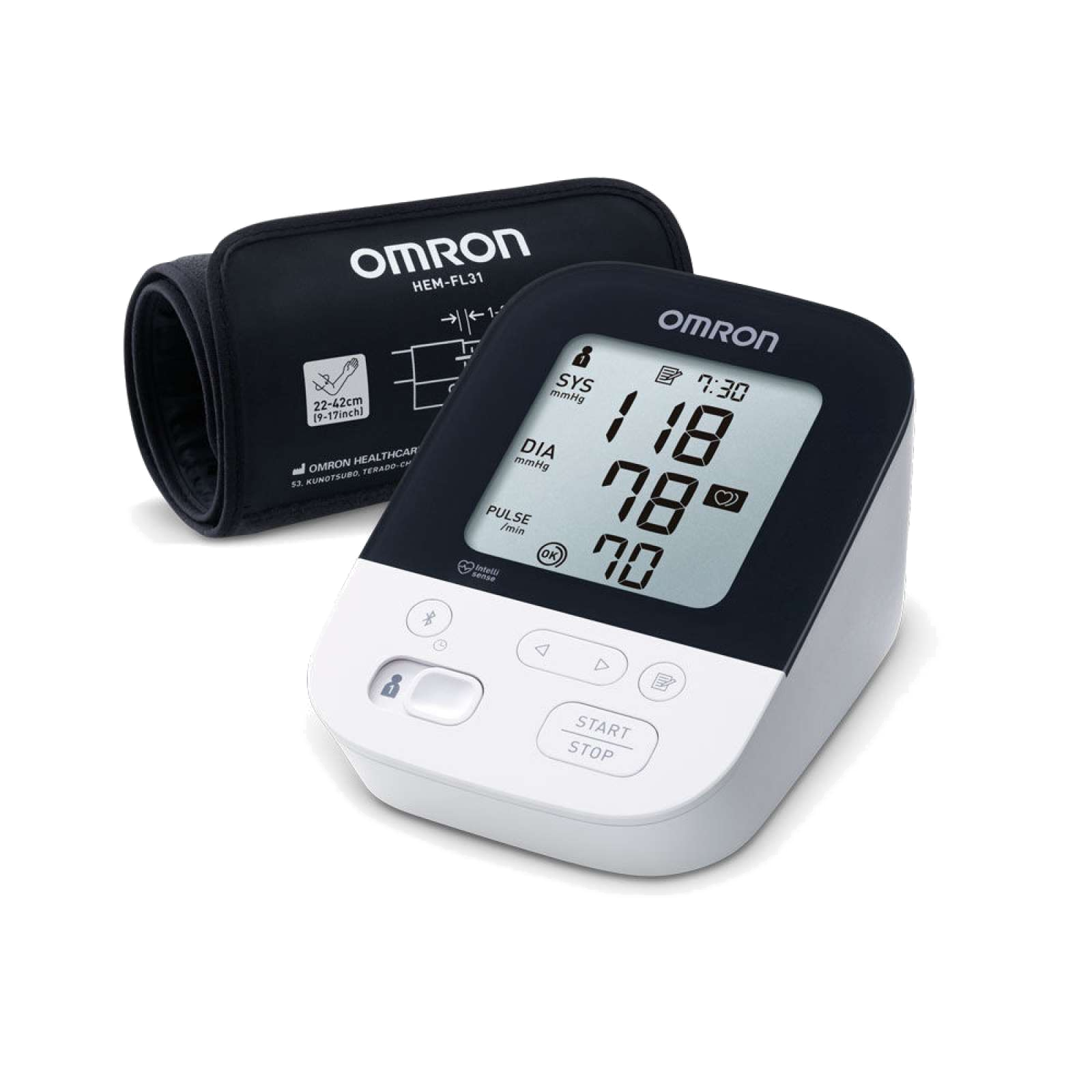
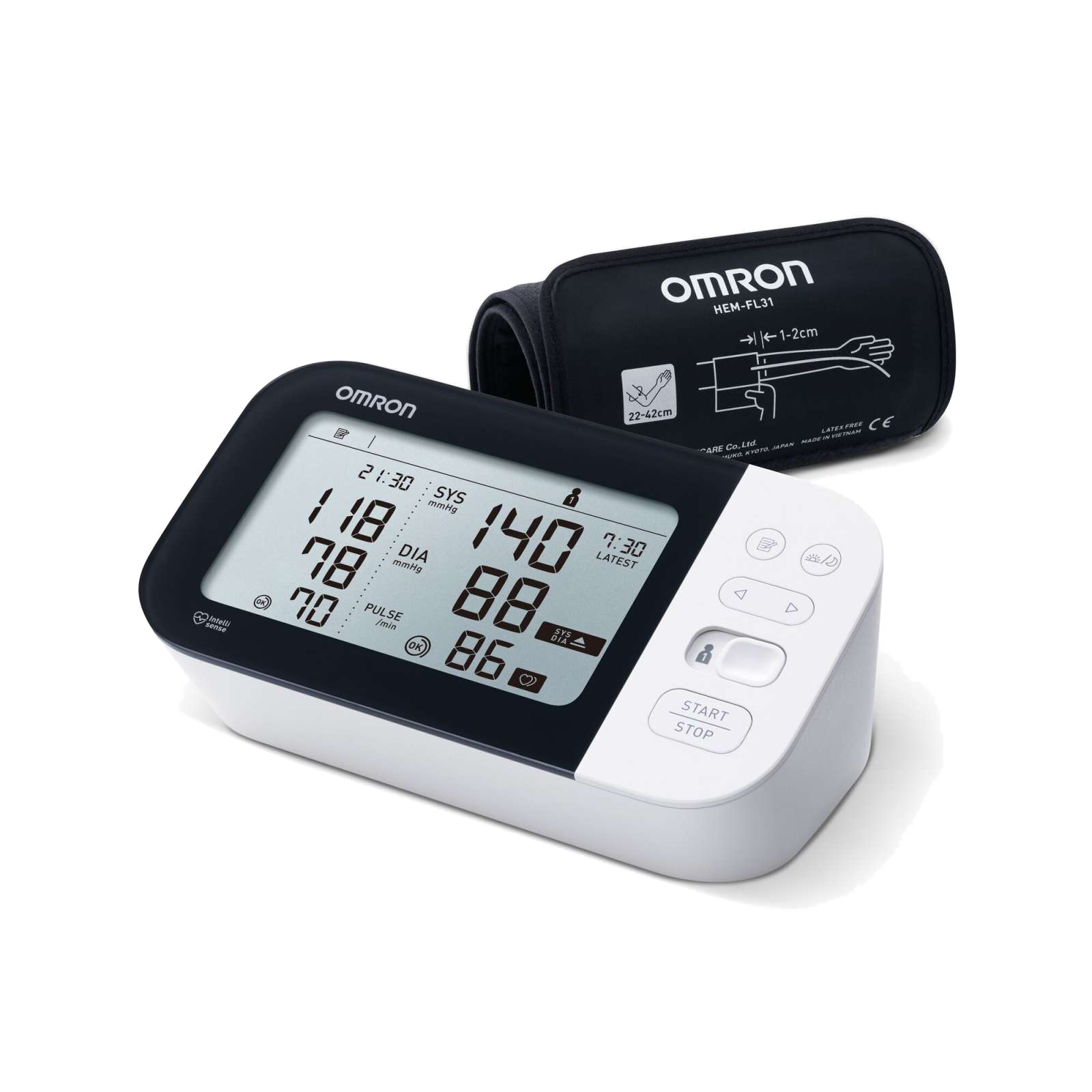
Omron M4 Intelli IT

Regular blood pressure measurement is the basis of hypertension monitoring and treatment control, yet a standard cuff is often applied incorrectly and the result is unreliable. Omron M4 Intelli IT has the Intelli Wrap cuff (22–42 cm), which measures correctly regardless of its rotation on the arm, plus cuff-wrap and body-movement guides on the display. Measurement is episodic and starts with one button; Intellisense inflates the cuff only to the pressure needed. The device flags irregular heartbeat and high blood pressure. It is clinically validated, including in diabetics and in pregnancy. Unlike Omron Complete it does not record an ECG – it is the basic monitor for daily checks wherever ECG is not needed. It suits hospital wards, outpatient clinics, residential and field care and patients at home.

What it measures and does

Systolic and diastolic pressure and pulse by the oscillometric method (0–299 mmHg, pulse 40–180/min). Irregular heartbeat and body movement detection, high blood pressure indicator, memory 2 × 60 readings. Results are transferred via Bluetooth to PROFI-LOG and stored in the patient record.

Operator requirements
— Operated by the patient, a carer or a nurse.
— The cuff goes on the bare upper arm 1–2 cm above the elbow; measure seated with the arm supported at heart level.
— Powered by 4 × AA batteries, approx. 1,000 measurements.
Certification

CE-marked medical device, clinically validated (ESH).

Dimensions, weight

Unit 105 × 152 × 85 mm, 340 g without batteries; cuff 163 g.

purchase 103 €rental 10 € / month
Consumables and operation
Large cuff Omron EC-L easy L 26 € / 1 pc
Fingertip pulse oximeter with Bluetooth for quick saturation checks

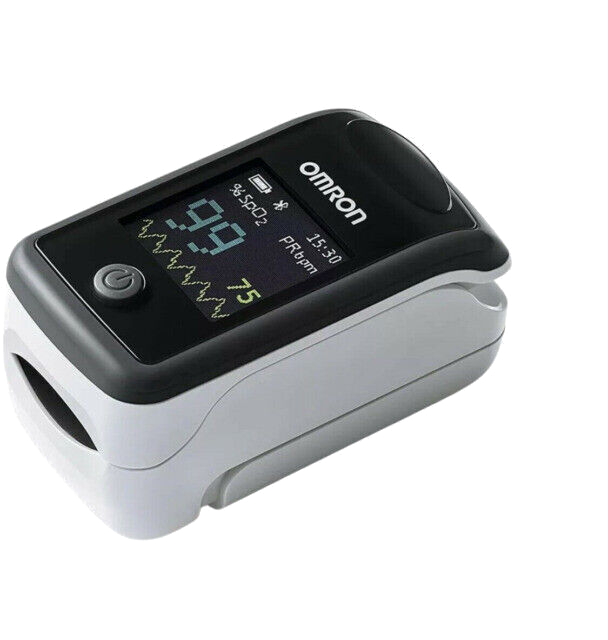
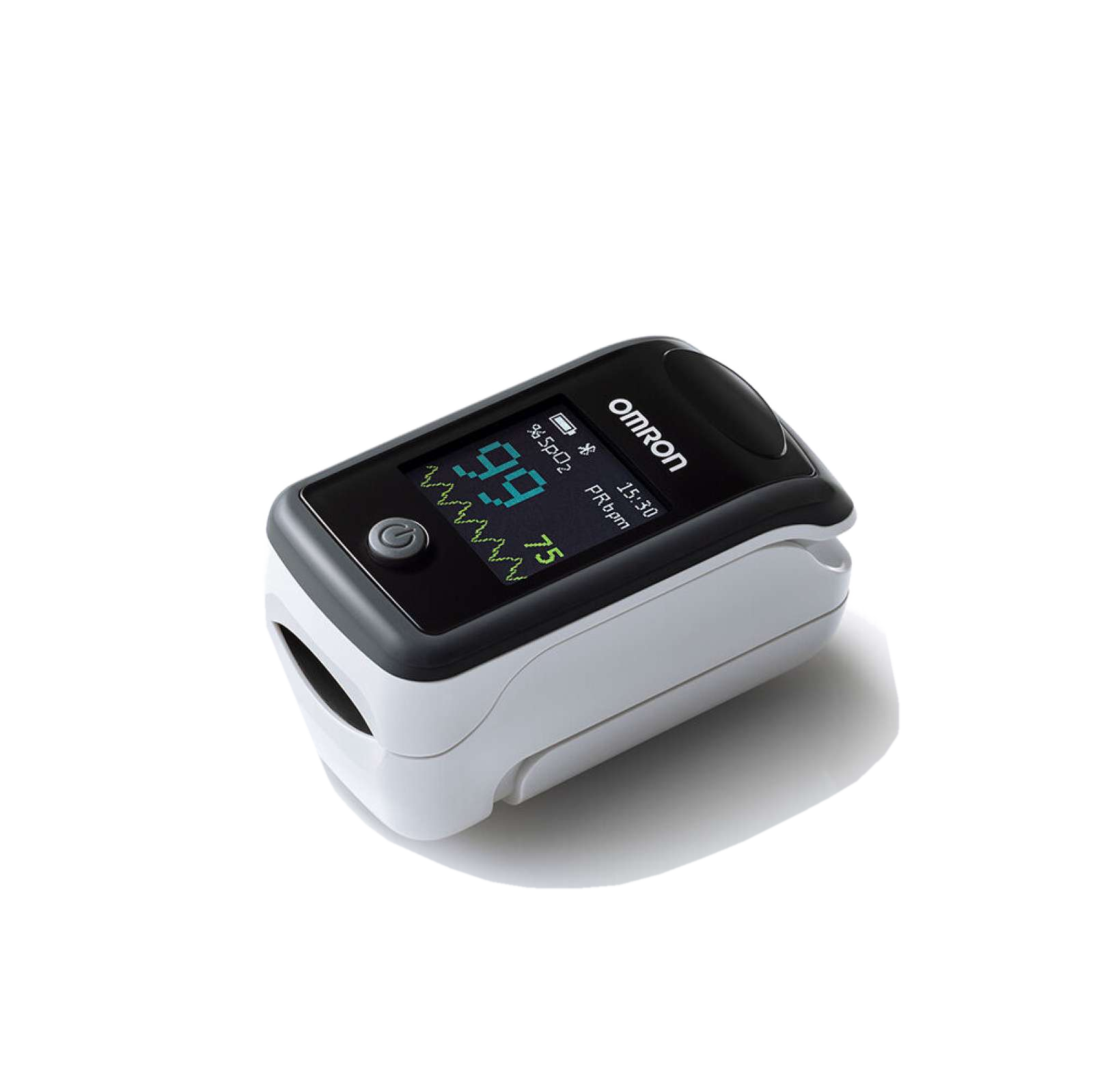
SPO2 Omron P300 Intelli IT

A drop in oxygen saturation is an early sign of deterioration in lung and heart disease and in infections, and catching it must not depend on whether staff have time to write the value down. Omron P300 Intelli IT clips onto a finger, shows SpO₂ and pulse within seconds and sends the values via Bluetooth. Measurement is episodic, a single spot check – the manufacturer does not intend it for continuous monitoring. The device is clinically tested, light and latex-free; it switches itself off when the finger is removed. Of the basic measurement set it is the fastest check: no cuff, no patient preparation. It suits any setting where saturation is measured repeatedly in many people – on the ward, in residential care, in the field and at home.

What it measures and does

Blood oxygen saturation (SpO₂) and pulse rate by spot measurement on the finger. Automatic power-off within 8 s after the finger is removed. Results are transferred via Bluetooth to PROFI-LOG and stored in the patient record.

Operator requirements
— Operated by the patient or a carer.
— The finger must be still, without nail polish; usable in children from 7 years, not on toes.
— Powered by 2 × AAA batteries.
Certification

CE-marked medical device, clinically tested.

Dimensions, weight

Weight 60 g.

purchase 167 €rental 16 € / month
Non-contact infrared thermometer with Bluetooth for hygienic measurement

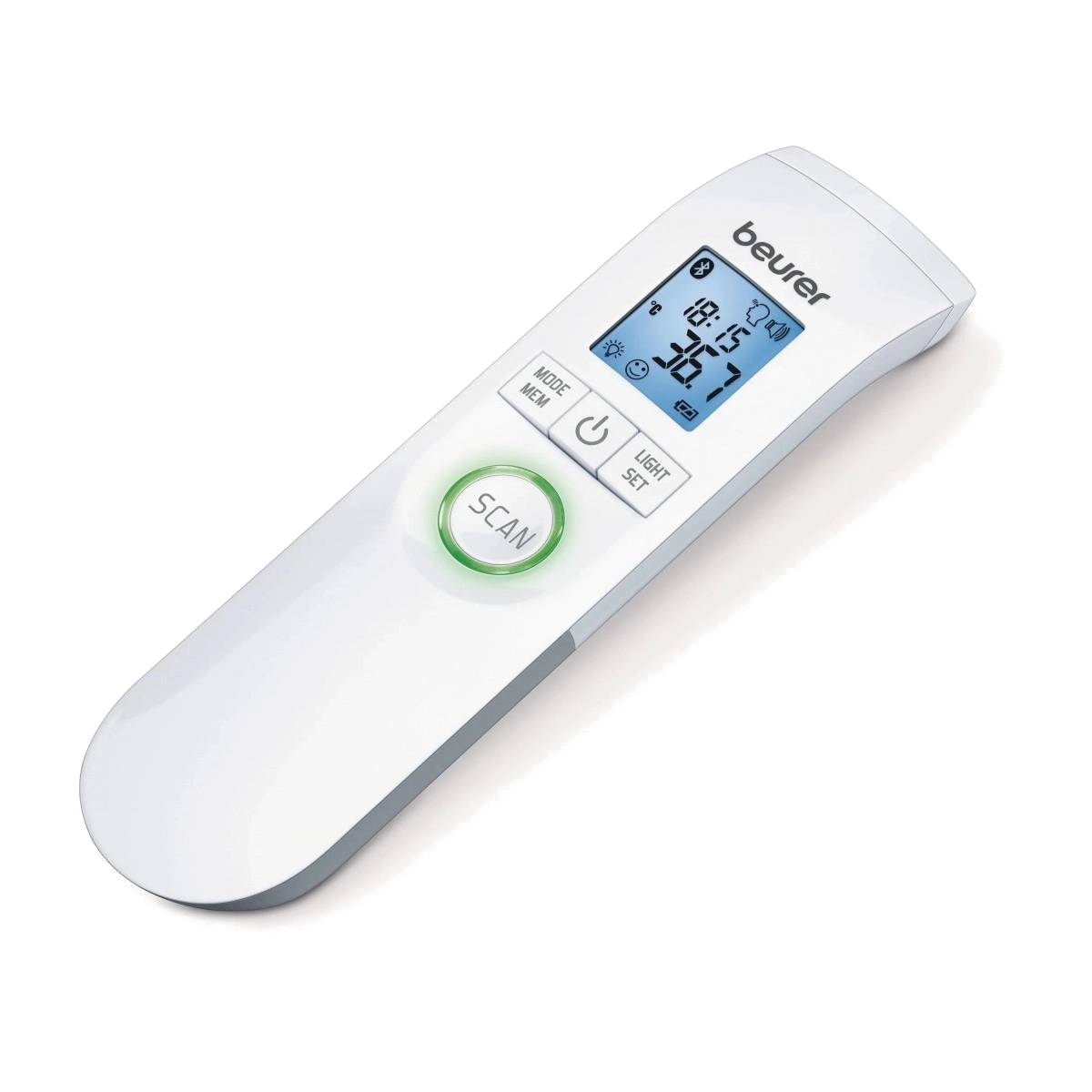
Thermometer Beurer FT 95

Measuring temperature in many people one after another – on a ward, in residential care or in children – runs into hygiene and time: a conventional thermometer must be disinfected and takes tens of seconds. Beurer FT 95 measures by infrared from the forehead at 2–3 cm without touching, the result appears within seconds, and colour LED signalling (green, yellow, red) shows at a glance whether the temperature is normal, raised or feverish. Measurement is episodic. Unlike Omron Eco Temp it needs no body contact and suits restless or sleeping patients; conversely Eco Temp is the cheaper choice for one patient at home. It suits temperature screening at entry, in the clinic, on the ward and in the field.

What it measures and does

Body temperature from the forehead by infrared sensing (34–42.2 °C, accuracy ±0.2 °C), plus object and room temperature (0–80 °C). Memory of 60 readings, LED temperature alarm. Results are transferred via Bluetooth to PROFI-LOG and stored in the patient record.

Operator requirements
— Operated by the patient, a carer or a nurse.
— The forehead must be dry and free of hair; hold the device 2–3 cm from the skin.
— No disinfection between patients, as it does not touch the skin.
— Powered by 2 × AAA batteries.
Certification

CE-marked medical device.

Dimensions, weight

167.4 × 41.5 × 28 mm, approx. 73 g.

purchase 60 €rental 6 € / month
Digital underarm and oral thermometer for one patient at home

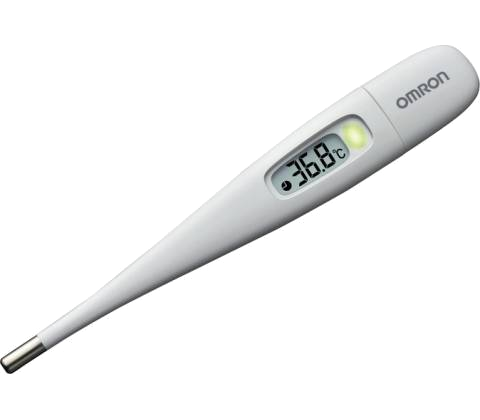
OMRON ECO Temp Intelli IT thermometer

A patient who measures their own temperature regularly does not need a non-contact device – a reliable digital thermometer that does not forget the result is enough. Omron Eco Temp Intelli IT measures in 40 seconds under the arm or in the mouth, signals the end of measurement by sound and light and passes the value to the app. Measurement is episodic. Unlike Beurer FT 95 it requires body contact and a longer measurement, but it is considerably cheaper and more accurate where one patient is followed over time – convalescence, chronic disease, home care. For screening many people in succession the non-contact Beurer is the better choice.

What it measures and does

Body temperature by contact digital measurement under the arm or in the mouth in 40 s, with recall of the last reading. The result is transferred to PROFI-LOG and stored in the patient record.

Operator requirements
— Operated by the patient alone.
— Dry the armpit before measuring and keep the tip in contact with the skin throughout; wipe with disinfectant after use.
— Powered by a replaceable CR1220 coin cell.
Certification

CE-marked medical device.

purchase 21 €rental 2 € / month
Upper arm blood pressure monitor with atrial fibrillation indicator and smart cuff

Omron M7 Intelli IT (blood pressure monitor)

Atrial fibrillation is a common cause of stroke and goes unnoticed during ordinary blood pressure measurement because the patient does not feel it. The Omron M7 Intelli IT also monitors pulse irregularity while measuring blood pressure and, in AFib mode, takes three consecutive measurements after which it indicates possible atrial fibrillation – it does not diagnose it, but prompts an ECG. Measurement is a spot reading at the press of one button. The Intelli Wrap cuff 22–42 cm measures correctly regardless of its rotation on the arm, and the device reports incorrect cuff fitting and body movement. Compared with the Omron M4 Intelli IT it adds the AFib indicator and a memory of 2 × 100 readings; unlike the Omron Complete it does not record an ECG, it only signals the need for one. It is suited to patients with hypertension and arrhythmia risk at home, in residential and field services and in clinics.

What it measures and does

Systolic and diastolic pressure (60–260 / 40–215 mmHg, accuracy ±3 mmHg) and pulse rate (40–180/min) by the oscillometric method. Indication of possible atrial fibrillation from three consecutive measurements, irregular heartbeat and body movement detection. Memory 2 users × 100 readings. Results are transferred via Bluetooth to PROFI-LOG and stored in the patient record.

Operator requirements
— Manageable by the patient, a carer or a nurse.
— The cuff is fitted on the bare upper arm 1–2 cm above the elbow; measure seated with the arm supported at heart level; for AFib hold the button for 2 s.
— Powered by 4 × AA batteries (approx. 1,000 measurements) or an optional AC adapter.
Certification

CE-marked medical device; clinically validated (ISO 81060-2:2013, ESH protocol), type BF applied part, IP20 rated.

Dimensions, weight

Monitor 191 × 85 × 120 mm, approx. 460 g without batteries; cuff 145 × 532 mm, approx. 163 g.

Adhesive underarm thermometer that watches for fever continuously

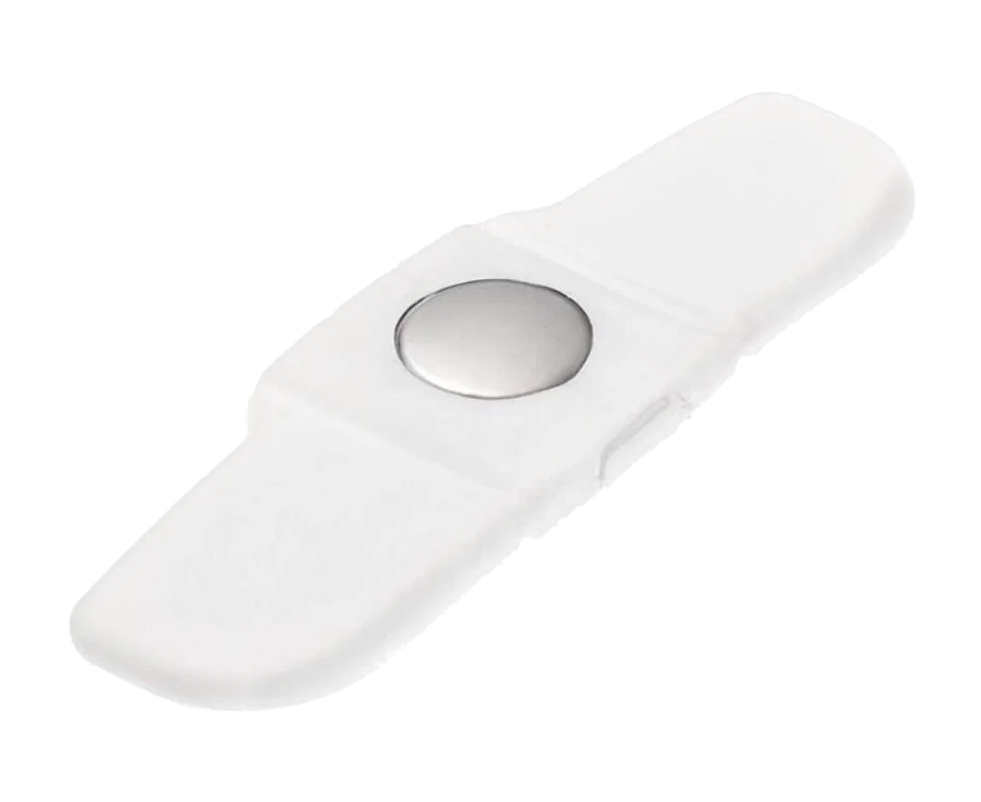
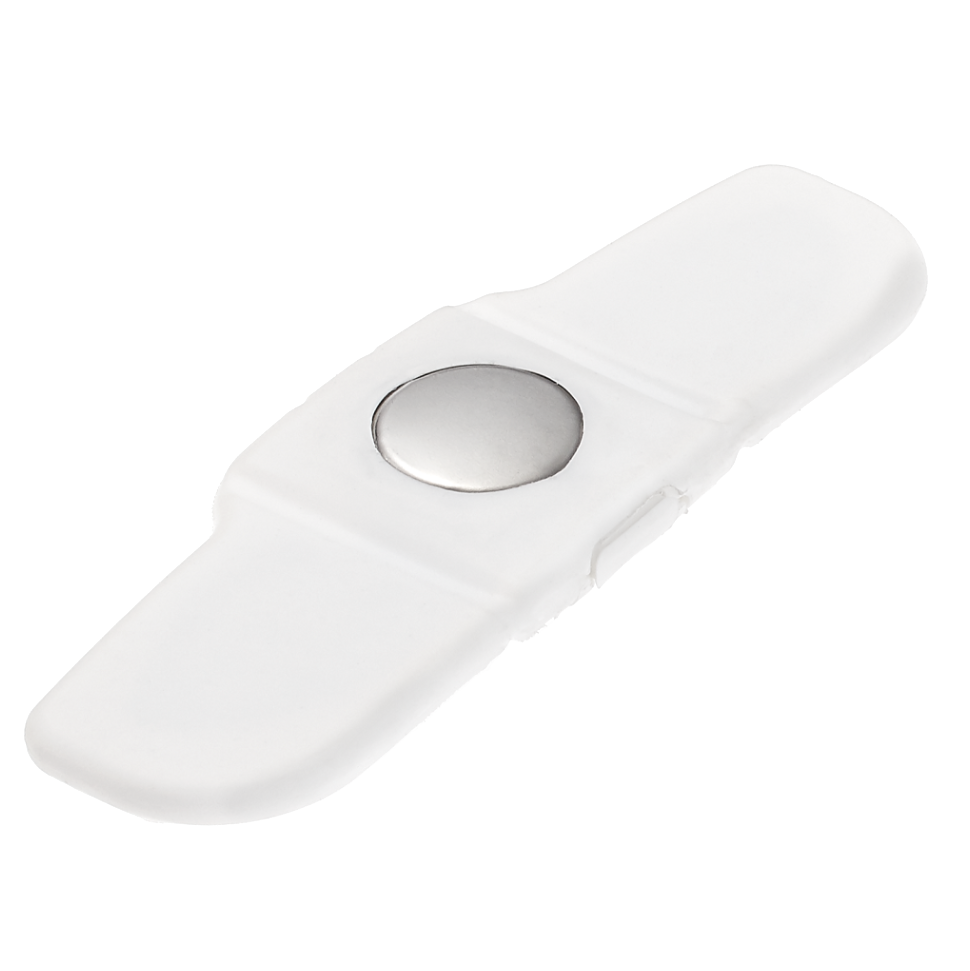
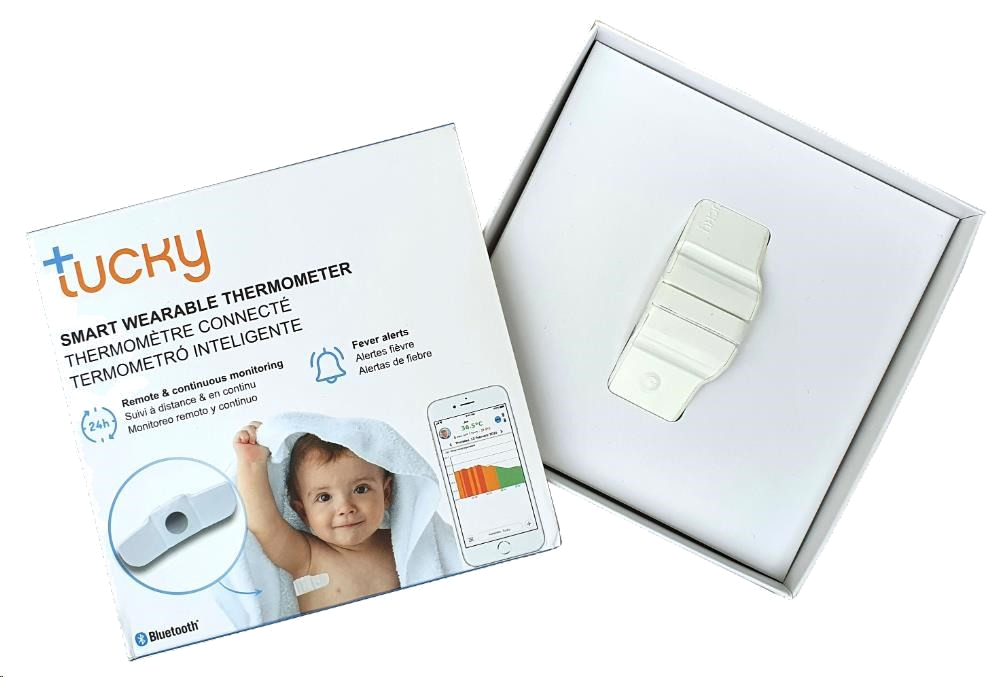
Tucky continuous thermometer

In a child with fever or a patient after surgery, temperature is measured repeatedly, yet the onset of fever between measurements is missed and night-time measurements wake the patient. Tucky is a small thermometer that is attached with a double-sided adhesive under the right armpit and measures body temperature continuously; it sends the values via Bluetooth to the app and on to PROFI-LOG and alerts immediately when the set threshold (default 38.4 °C) is exceeded. Measurement is continuous, with no operator action. The manufacturer intends it for non-urgent ambulatory temperature monitoring from 29 days of age, reusable at home and single-patient in hospital. Unlike the Beurer FT 95 and Omron Eco Temp Intelli IT thermometers in our range it does not take spot readings but tracks the temperature trend for days. It is suited to home care of children and seniors, residential care and hospital wards.

What it measures and does

Continuous axillary body temperature, range 24–44 °C, accuracy ±0.1 °C between 37–39 °C (±0.2 °C between 32–37 and 39–42 °C). Alerts for high temperature, rolling onto the stomach, detachment, low battery and connection loss. Transfer via Bluetooth Low Energy 4.2 up to 10 m to the Tucky app and PROFI-LOG; if the connection is lost it stores up to 8 hours of measurements.

Operator requirements
— Manageable by a parent, carer or nurse: attach with an ADH-21 adhesive as high as possible under the right armpit and pair with the app; the temperature settles after about 15 minutes with the arm closed.
— The adhesive is single-use and worn for a maximum of 24 h.
— Micro-USB charging approx. 2 h, battery life 5 days.
— IP22 rated – remove before bathing.
Certification

CE-marked class IIa medical device, manufacturer certified to ISO 13485 (notified body Bureau Veritas).

Ring for overnight monitoring of oxygen saturation and pulse

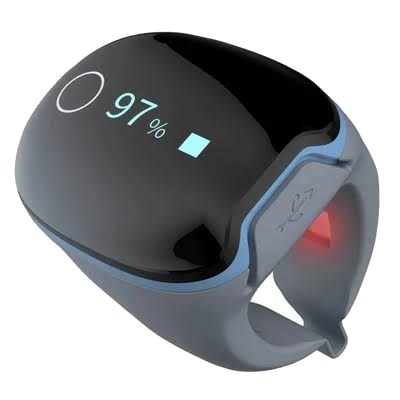
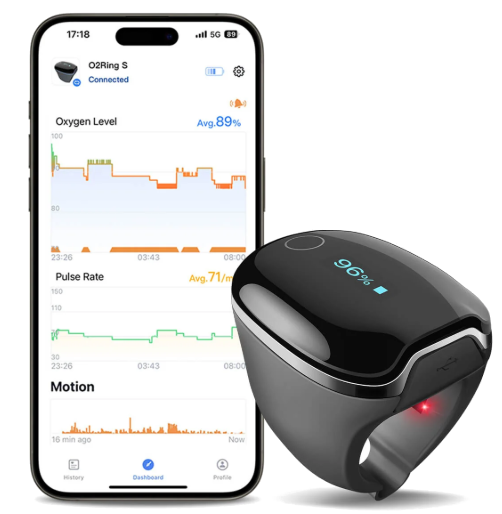
Wellue O2 Ring

Drops in saturation during sleep – in sleep apnoea or COPD – are missed by a spot-check oximeter because they occur at night when nobody is measuring. The O2Ring is a soft silicone ring worn on the finger that records SpO2 and pulse every second all night; if the value drops below the set threshold it wakes the patient quietly by vibration, without a sound that would disturb others. Measurement is continuous and runs by itself. The recording is transferred via Bluetooth to the app and to PROFI-LOG, where the physician sees the whole night's trend. Unlike the Omron P300 Intelli IT fingertip oximeter in our range it does not take spot readings but monitors continuously for up to 16 hours; unlike the CardioWatch 287-2 wristband it tracks only SpO2 and pulse, but is smaller and lighter (15 g). It is suited to patients with suspected sleep apnoea or chronic lung disease at home, residential care and hospital wards for overnight monitoring.

What it measures and does

Oxygen saturation SpO2 70–100% (accuracy ±2% in the 80–99% range, ±3% in the 70–79% range) and pulse rate 30–250/min (±2/min or ±2%), recorded every second. Vibration alert in 5 levels when SpO2 or pulse leaves the set limits. Memory 4 sessions of 10 hours each; transfer via Bluetooth 4.0 BLE to the ViHealth app and PROFI-LOG, PDF/CSV report export.

Operator requirements
— Manageable by the patient alone: put the ring on a finger (circumference 55–80 mm), measurement starts automatically.
— Built-in Li-Po battery charges in 2–3 h, lasts 16 h of typical use.
— A 0.96" display shows the current values.
Dimensions, weight

Approx. 38 × 30 × 38 mm, 15 g.

Glycaemia glucometers and consumables 6 devices
Blood glucose meter with Bluetooth and colour target-range indicator

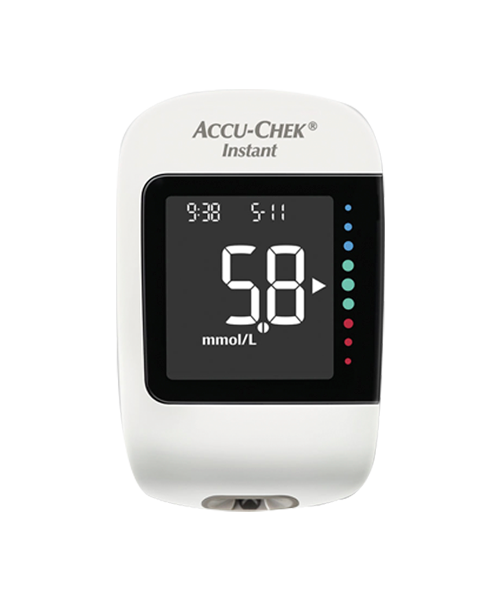
Blood glucose Accu-Chek Instant

Glucose monitoring in a diabetic stands or falls on how reliably values are recorded and whether the patient understands what they mean. Accu-Chek Instant measures glucose from a 0.6 µl drop of blood in under 4 seconds and the colour scale on the display shows at once whether the result is below, within or above the target range. Measurement is episodic. Strips need no coding; the meter is ready after setting time and date. Unlike Istel ABRA smart BT it also works with venous, arterial and neonatal blood and has a larger memory; ABRA is the simpler choice for home self-monitoring. It suits everything from hospital wards through residential care to the patient at home.

What it measures and does

Blood glucose from capillary, venous, arterial or neonatal blood by electrochemistry (GDH enzyme), range 0.6–33.3 mmol/l, sample 0.6 µl, result in under 4 s. Memory of 720 results with 7-, 14-, 30- and 90-day averages, under-fill detection. Results are transferred via Bluetooth to PROFI-LOG and stored in the patient record.

Operator requirements
— Operated by the patient, a carer or a nurse.
— Requires Accu-Chek Instant test strips and lancets; a drop of blood from the finger is applied to the wide yellow edge of the strip.
— Powered by a CR2032 coin cell.
Certification

CE-marked in vitro diagnostic medical device (IVD); the system meets EN ISO 15197:2015.

Dimensions, weight

77.1 × 48.6 × 15.3 mm, approx. 40 g with battery.

purchase 22 €rental 2 € / month
Consumables and operation
Test strips (50 pcs) 11 € / pack
Simple blood glucose meter with Bluetooth for home self-monitoring

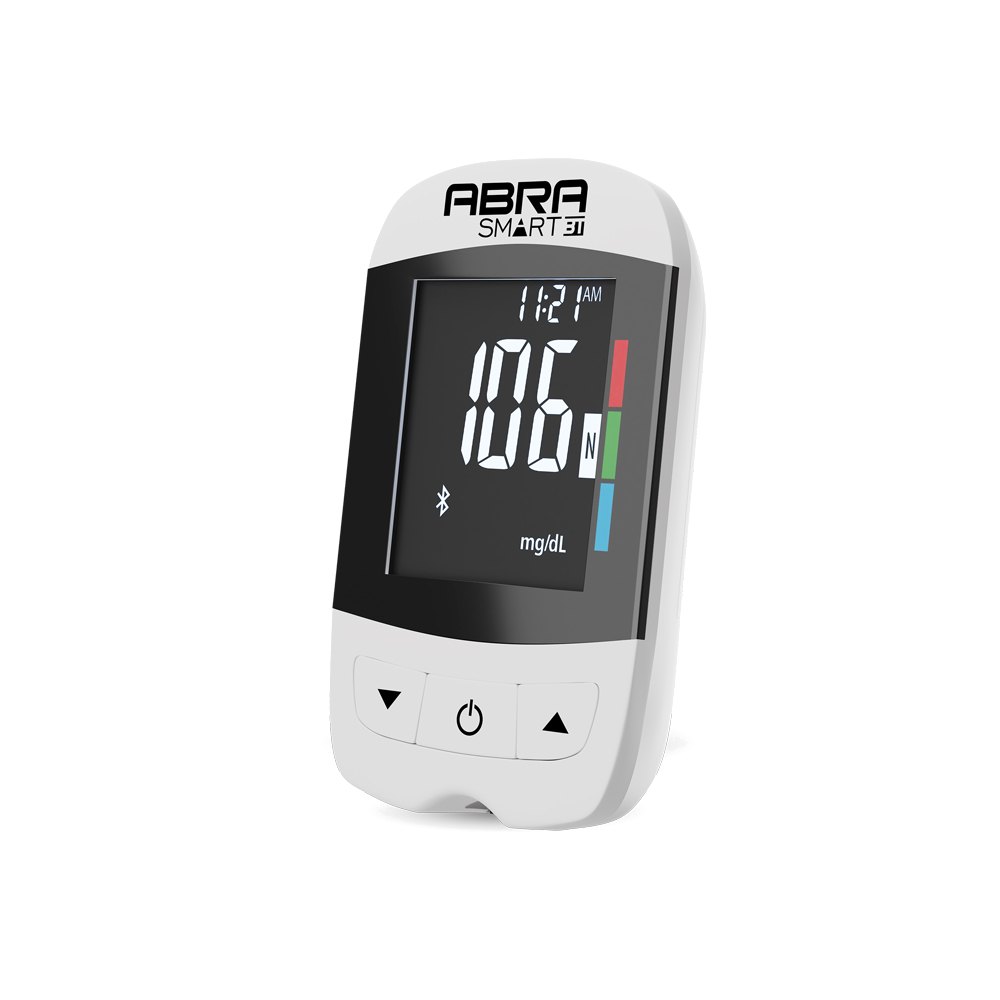
Istel ABRA smart BT

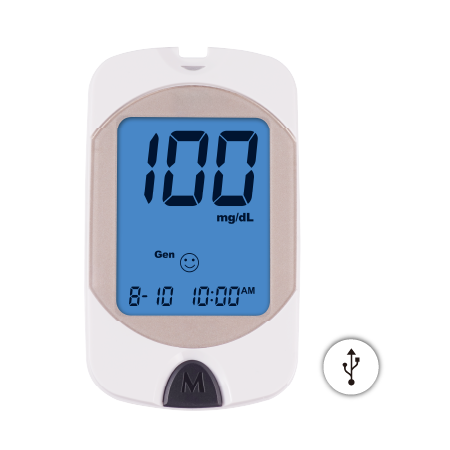
For a diabetic who measures several times a day, simplicity matters, and so does getting results to the doctor without transcription. Istel ABRA smart BT measures glucose from a 0.5 µl drop in 5 seconds and sends it via Bluetooth to the app. Measurement is episodic. The sample can be taken from the finger, palm or forearm, sparing sensitive fingertips. The meter is part of the Polish Istel Care telemedicine system and runs on two ordinary AAA batteries for about 2,000 measurements. Unlike Accu-Chek Instant it is intended for capillary blood only – it is the choice for self-monitoring at home and in residential care, not for clinical sampling.

What it measures and does

Blood glucose from capillary blood (finger, palm, forearm), range 1.1–33.3 mmol/l, sample ≥0.5 µl, result in 5 s, haematocrit 30–55 %. Memory of 1,000 results. Results are transferred via Bluetooth to PROFI-LOG and stored in the patient record.

Operator requirements
— Operated by the patient alone.
— Requires ABRA test strips and lancets.
— Powered by 2 × AAA batteries, approx. 2,000 measurements.
Certification

CE-marked in vitro diagnostic medical device (IVD); accuracy per EN ISO 15197:2015.

Dimensions, weight

97 × 57 × 20 mm, 60 g without batteries.

purchase 19 €rental 2 € / month
Consumables and operation
ABRA strips (50 pcs) 12 € / pack
Glucose meter that measures both blood glucose and ketones with one device

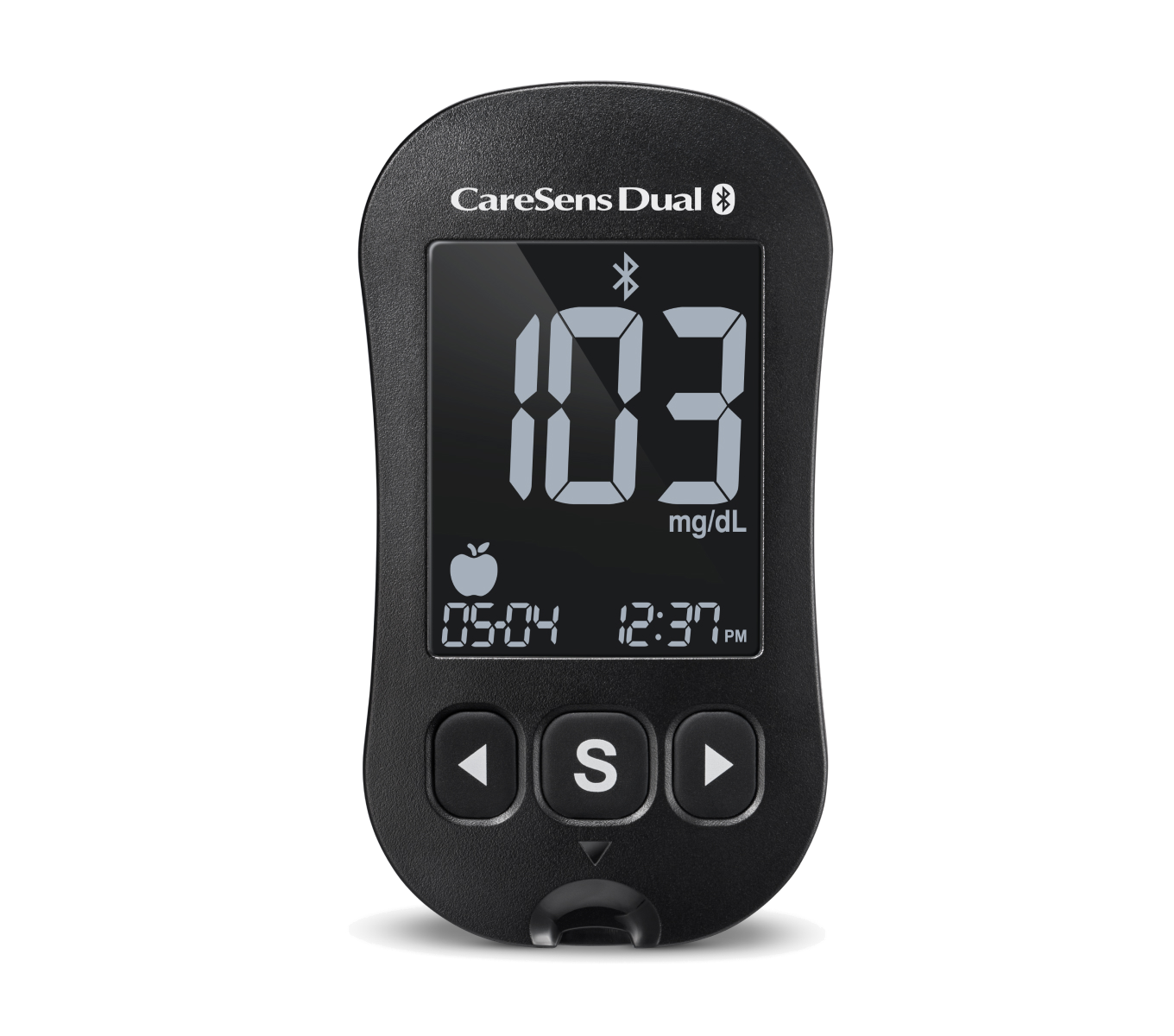
Caresens Dual

For diabetics, especially on insulin, knowing the blood glucose alone is not enough – hyperglycaemia carries the risk of ketoacidosis, which is only detected in time by measuring blood β-ketones. The CareSens Dual measures both with one device: glucose with the CareSens PRO strip and ketones with the KetoSens strip; the meter recognises the strip itself and needs no coding. Measurement is a spot test from a drop of finger blood. The manufacturer intends it for self-testing at home and for clinical settings; healthcare professionals may use venous blood for glucose. Compared with the Accu-Chek Instant it adds ketone measurement; compared with the FORA 6 DUO, which measures the same, it uses two coin cells and stores 1,000 results. It is suited to diabetology clinics, insulin-treated patients in home care, residential care and hospital wards.

What it measures and does

Blood glucose 1.1–33.3 mmol/L from a 0.4 µL sample in 5 s (haematocrit 15–65%); β-ketones 0.1–8.0 mmol/L from a 0.5 µL sample in 8 s (haematocrit 30–60%). Sample: fresh capillary blood, for glucose also venous blood drawn by a healthcare professional. Memory 1,000 results, transfer via Bluetooth Low Energy to PROFI-LOG.

Operator requirements
— Manageable by the patient or a carer: insert the strip, apply a drop of blood, the result appears within 8 s.
— No coding.
— Powered by 2 × CR2032 for approx. 1,000 tests.
— Consumables: CareSens PRO (glucose) and KetoSens (ketone) strips, lancets.
— Operating temperature 5–45 °C (ketones 15–30 °C).
Certification

CE-marked in vitro diagnostic medical device (per the manual: Directive 98/79/EC).

Dimensions, weight

106 × 58 × 17 mm, 72.6 g with batteries.

Glucose meter for clinical use with strip ejector and large display

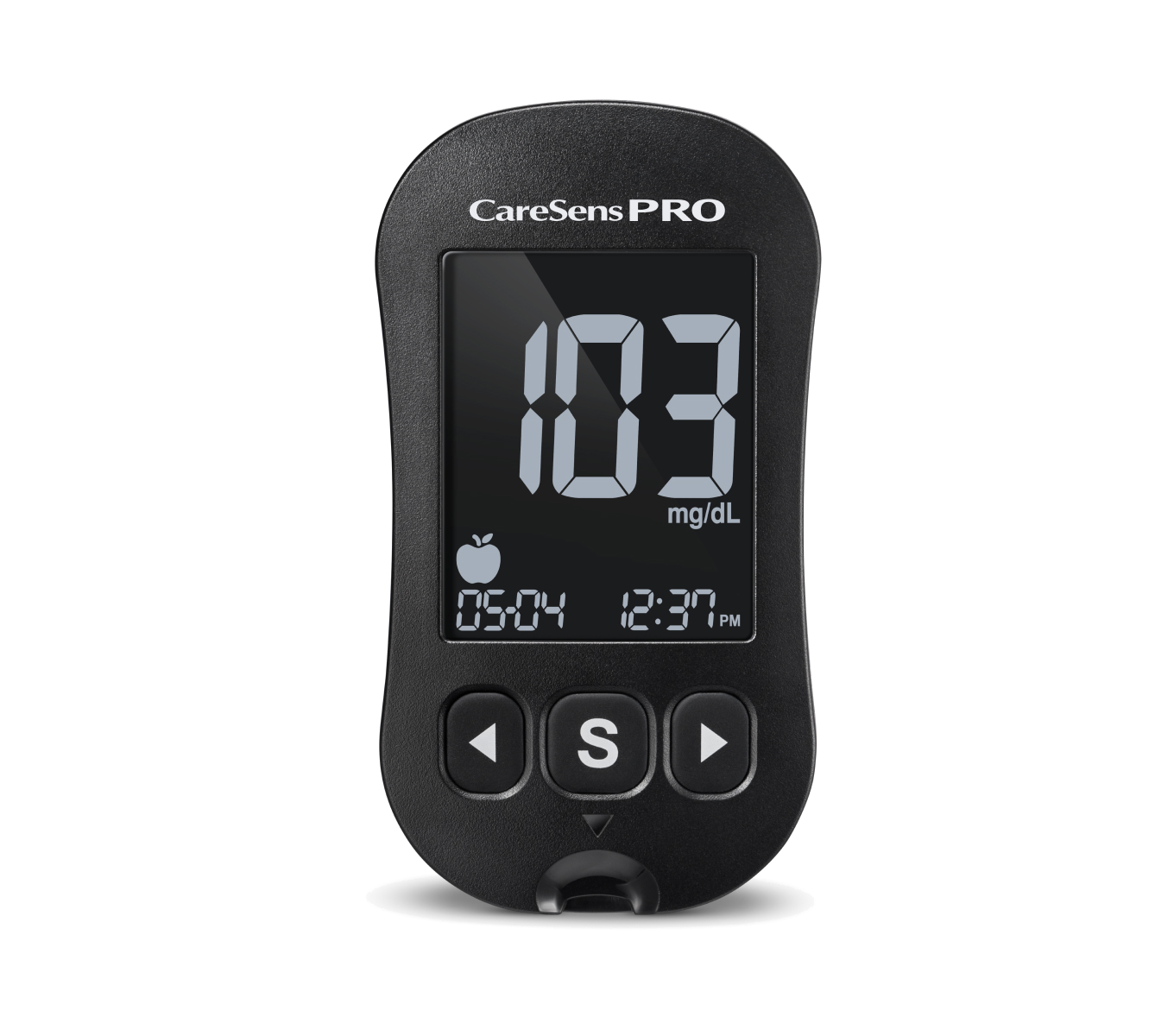
CareSens PRO

In the clinic and on the ward, blood glucose is measured for many patients in succession, and staff do not want to touch a used strip or squint at a small display. The CareSens PRO is optimised by the manufacturer for hospital use: the used strip is removed by the ejector, the result is shown on a 2.5" backlit display, and it measures from capillary as well as venous blood drawn by a healthcare professional. Measurement is a spot test from a 0.4 µL sample in 5 s, with no coding. Unlike the CareSens Dual from the same manufacturer it does not measure ketones and has no Bluetooth – it is a single-purpose meter for high volumes of tests; unlike the Accu-Chek Instant it offers a strip ejector and venous blood testing. The manufacturer intends it for home and clinical settings. It is suited mainly to hospital wards and clinics where glucose must be measured quickly for many patients, but also to residential care.

What it measures and does

Blood glucose 0.56–33.3 mmol/L from a 0.4 µL sample in 5 s, haematocrit 15–65%, plasma-calibrated. Sample: fresh capillary blood or venous blood drawn by a healthcare professional. Memory 1,000 results. Data transfer to a computer via a cable ordered separately.

Operator requirements
— Manageable by a nurse or the patient: insert the strip, apply a drop of blood, result in 5 s, remove the strip with the ejector.
— Powered by 2 × CR2032 for approx. 3,000 tests.
— Consumables: CareSens PRO strips, lancets.
— Operating temperature 5–45 °C.
Certification

CE-marked in vitro diagnostic medical device (per the manual: Directive 98/79/EC); strips comply with ISO 15197:2013.

Dimensions, weight

106 × 58 × 17 mm, 71.8 g with batteries.

Lightweight glucose and ketone meter running on a single AAA battery

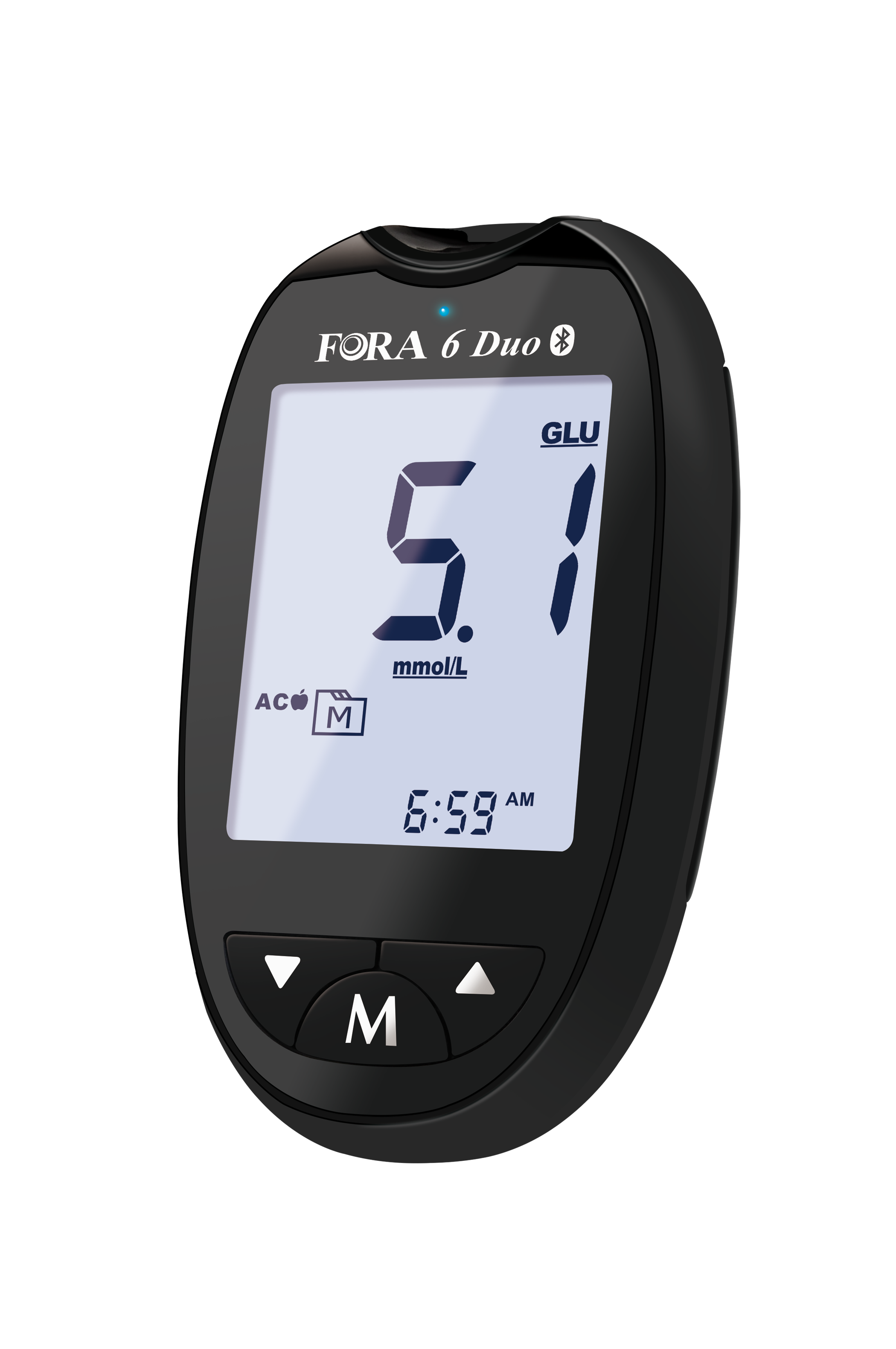
FORA 6 DUO

A patient on insulin needs to know, when glucose is high, whether ketones are forming; carrying two devices is impractical. The FORA 6 DUO measures both blood glucose and β-ketones with one device, each with its own strip, and sends the result via Bluetooth to PROFI-LOG. Measurement is a spot test from a drop of blood. It measures glucose from capillary, venous, neonatal and arterial blood and ketones from capillary and venous blood; ketone strips must not be used for newborns. Compared with the CareSens Dual, which measures the same, it is lighter (46 g) and runs on a single AAA battery; compared with the Accu-Chek Instant it adds ketones. It is suited to insulin-treated diabetics at home, field care, residential care and hospital wards.

What it measures and does

Blood glucose 0.55–33.3 mmol/L (haematocrit 0–70%), β-ketones 0.1–8.0 mmol/L (haematocrit 10–70%); results reported as plasma equivalents. Sample: glucose from capillary, venous, neonatal and arterial blood; ketones from capillary and venous blood. Memory 1,000 results with date and time. Transfer via Bluetooth to the iFORA HM app and to PROFI-LOG.

Operator requirements
— Manageable by the patient or a carer: insert the strip, apply blood, read the result.
— Powered by 1 × AAA alkaline battery.
— Temperature warning outside the range; operation 8–45 °C.
— Consumables: FORA glucose and ketone strips, lancets.
Certification

In vitro diagnostic medical device; tested to IEC/EN 61010-1, IEC/EN 61010-2-101, EN 61326-1, IEC/EN 61326-2-6, EN 301 489-17, EN 300 328.

Dimensions, weight

89.8 × 54.9 × 18 mm, 46.1 g without battery.

Simple glucose meter with 450-reading memory and USB transfer

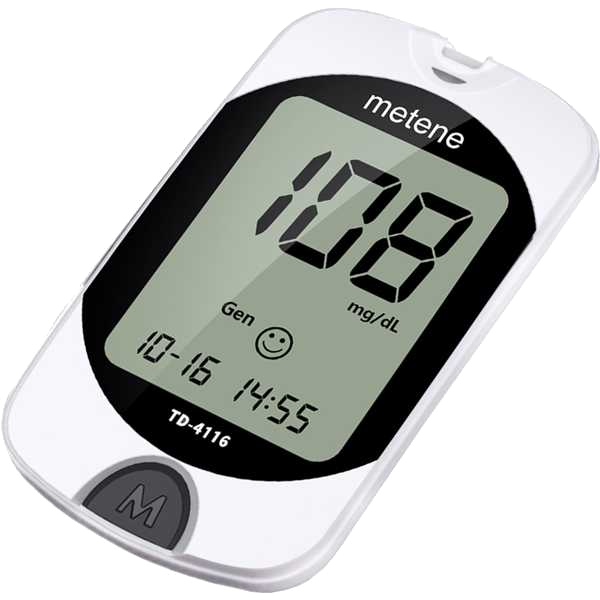
Next TD-4116 (glucose meter)

For routine glucose checks a reliable device that measures the value in a few seconds and needs no pairing is enough. The TD-4116 is a GOD-enzyme glucose meter that measures blood glucose from a 0.7 µL sample in 7 seconds and stores 450 results with a before/after meal tag. Measurement is a spot test. Results are transferred to PROFI-LOG by cable via mini USB. It runs on a single AAA battery. Unlike the Accu-Chek Instant, CareSens Dual and FORA 6 DUO in our range it has no Bluetooth and does not measure ketones – it is a basic device for where occasional data download by cable is sufficient. It is suited to patients at home, residential care and clinics with a smaller volume of tests.

What it measures and does

Blood glucose 1.1–33.3 mmol/L from a 0.7 µL sample in 7 s, haematocrit 30–55%, GOD enzyme. Memory 450 results with optional before/after meal tag. Transfer of results by mini USB cable to PROFI-LOG.

Operator requirements
— Manageable by the patient or a carer: insert the strip, apply a drop of blood, result in 7 s.
— Powered by 1 × AAA.
— Consumables: TaiDoc test strips for the TD-4116, lancets.
Dimensions, weight

89.8 × 52.4 × 17.3 mm, 46.6 g without battery.

Biochemistry and laboratory INR, CRP, D-dimer, urine 4 devices
Handheld laboratory for INR, CRP and D-dimer from a drop of blood

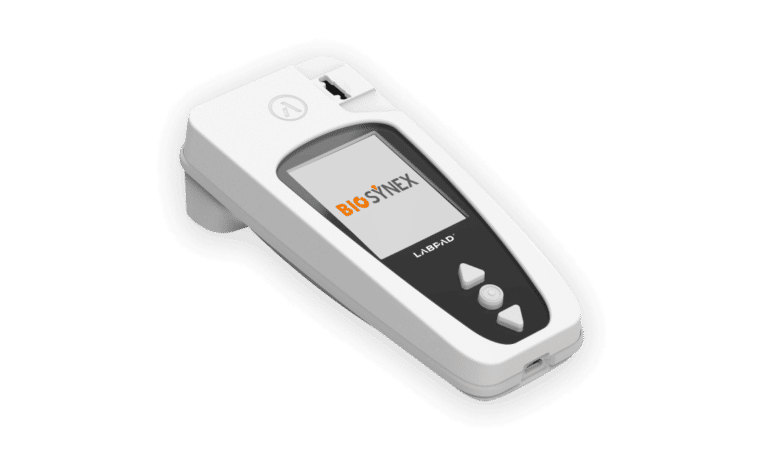
Labpad

Deciding whether a patient has an infection, whether it is bacterial, or whether anticoagulation is correctly set usually waits for a laboratory result. Labpad Evolution gives these results on the spot from a drop of capillary blood: INR within 60 s, CRP within 120 s and D-dimer within 5 minutes. Measurement is episodic; a single-use SmartChip is inserted for each test. The reader is portable, battery-powered and Bluetooth-enabled, so the result goes straight into the record. Unlike CoaguChek INRange it measures inflammatory and coagulation markers besides INR; compared with Igloo Pro it is simpler and narrower in test range. It suits hospital wards, residential and field services where speed matters and sample transport is avoided.

What it measures and does

INR (prothrombin time), CRP and D-dimer from capillary blood using single-use Tsmart and Ksmart chips. INR result within 60 s, CRP within 120 s, D-dimer within 5 min. Patient identification via app or barcode reader. Results are transferred via Bluetooth to PROFI-LOG and stored in the patient record.

Operator requirements
— Operated by a nurse or trained user; interpretation is for the physician.
— Requires a single-use SmartChip for each test and a drop of blood from the finger.
— Powered by a built-in battery charged via USB.
Certification

CE-marked in vitro diagnostic medical device under Regulation (EU) 2017/746 (IVDR).

Dimensions, weight

172 × 74 × 20–46 mm, 270 g.

purchase 917 €rental 92 € / month
Consumables and operation
CRP test (25 pcs) 106 € / pack
D-DIMER test (25 pcs) 166 € / pack
Coagulation meter for INR self-testing in patients on warfarin

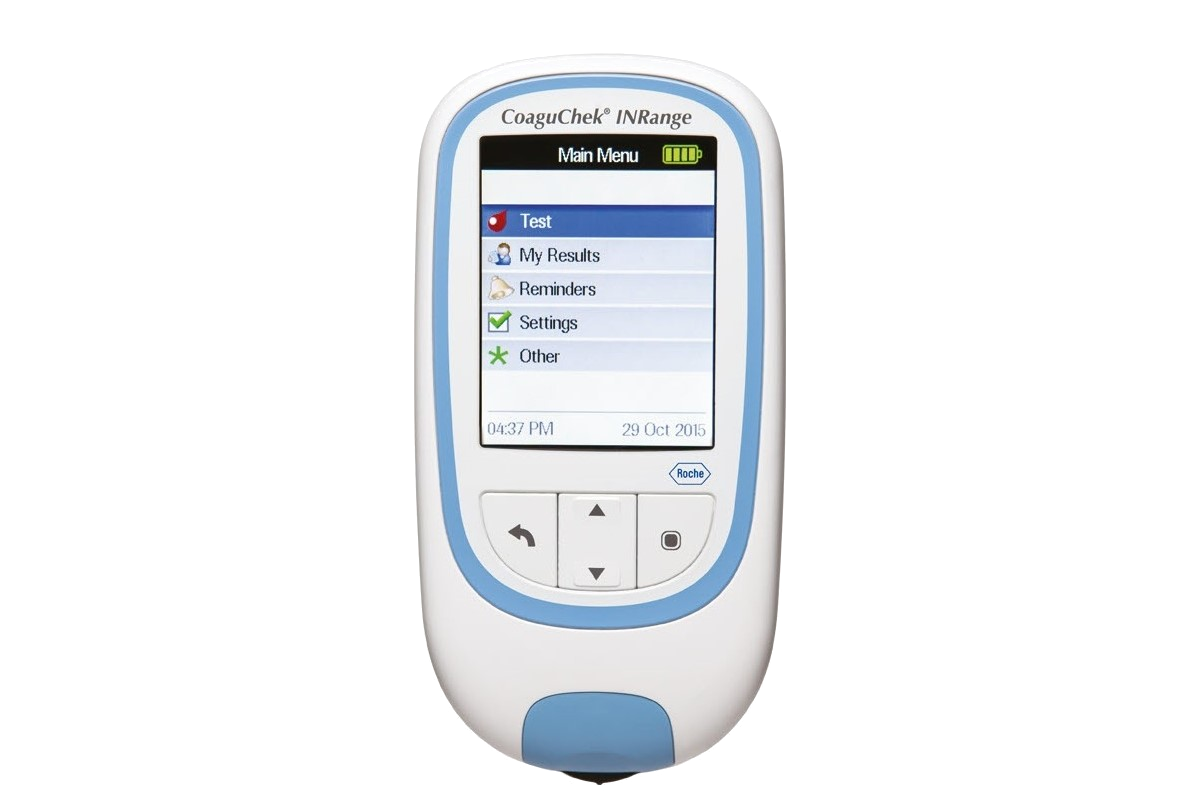
CoaguChek INRange

A patient on vitamin K antagonists needs INR regularly, but a trip to the laboratory every two weeks is a burden for the patient and the service. CoaguChek INRange measures INR from a finger-prick drop in about a minute and sends the result via Bluetooth. Measurement is episodic. The manufacturer intends it solely for self-testing by a single patient – it is a home device, not one shared on a ward. Unlike Labpad Evolution it measures INR only, but it is simpler and uses the established CoaguChek XS PT strips. It suits the patient at home and field services where a nurse checks values remotely.

What it measures and does

INR and prothrombin time from ≥8 µl of fresh capillary blood by electrochemical (amperometric) detection, INR range 0.8–8.0, result in about 1 minute. Memory of 400 results with date and time, automatic power-off after 2 minutes. Results are transferred via Bluetooth to PROFI-LOG and stored in the patient record.

Operator requirements
— Operated by the patient alone after training.
— Requires CoaguChek XS PT Test PST strips and lancets; a drop of blood from the finger is applied to the strip.
— Powered by 4 × AAA batteries, approx. 60 tests or 1 year.
Certification

CE-marked in vitro diagnostic medical device (IVD) intended for self-testing.

Dimensions, weight

145 × 75 × 30 mm, 135 g without batteries.

purchase 1,032 €rental 99 € / month
Universal rapid-test reader for professional point-of-care diagnostics

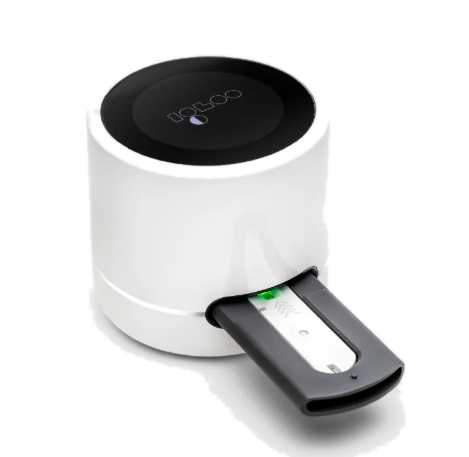
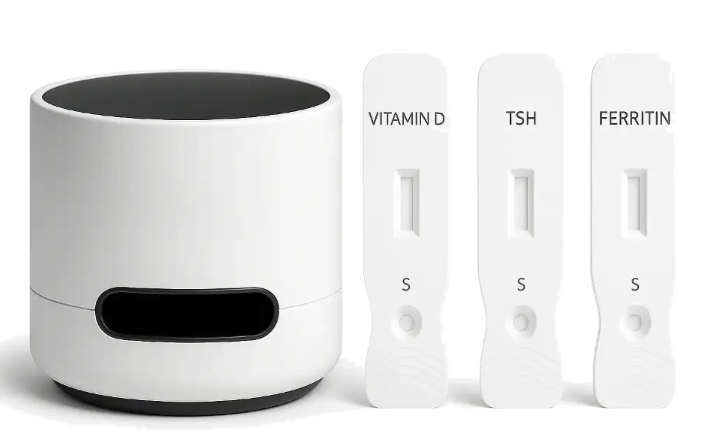
Igloo – reader

Rapid tests from a drop of blood, urine or saliva are in practice read by eye, so the result depends on who is looking. Igloo Pro by Dx365 reads the test cassette optically and returns a qualitative, semi-quantitative or quantitative result, up to 8 parameters at once for multiplex tests. Measurement is episodic. Thanks to adapters it works with cassettes from various manufacturers, so one reader covers inflammatory markers (CRP), coagulation (D-dimer), HbA1c, vitamin D, ferritin, troponin or hormones. Compared with Labpad Evolution it offers a broader test menu but requires calibration for each lot and strictly professional operation. It suits hospital wards and clinics that want to consolidate several rapid tests into one device.

What it measures and does

Optical reading of immunochromatographic and colorimetric rapid tests (lateral flow) from blood, urine, saliva and other samples; qualitative, semi-quantitative or quantitative result depending on the test, up to 8 parameters simultaneously. Results are transferred via Bluetooth or USB to PROFI-LOG and stored in the patient record.

Operator requirements
— Professional operation only (physician, nurse, laboratory technician); interpretation is for the physician.
— Requires test cassettes with a datamatrix code, the matching adapter and lot calibration.
— Powered by a 2,000 mAh Li-ion battery or USB-C, up to 24 h of testing.
Certification

CE-marked in vitro diagnostic medical device for professional use under Regulation (EU) 2017/746 (IVDR).

Dimensions, weight

87.5 × 87.5 × 91 mm, approx. 400 g.

purchase 1,581 €rental 97 € / month
Consumables and operation
CRP cartridge 5 € / 1 test
INR cartridge 7 € / 1 test
D-DIMER cartridge 6 € / 1 test
FT3 cartridge 5 € / 1 test
NT-proBNP cartridge 8 € / 1 test
HBA1C cartridge 6 € / 1 test
Lipid profile + haemoglobin cartridge 6 € / 1 test
Ferritin cartridge 7 € / 1 test
TSH cartridge 5 € / 1 test
Pocket urine analyser for objective reading of test strips

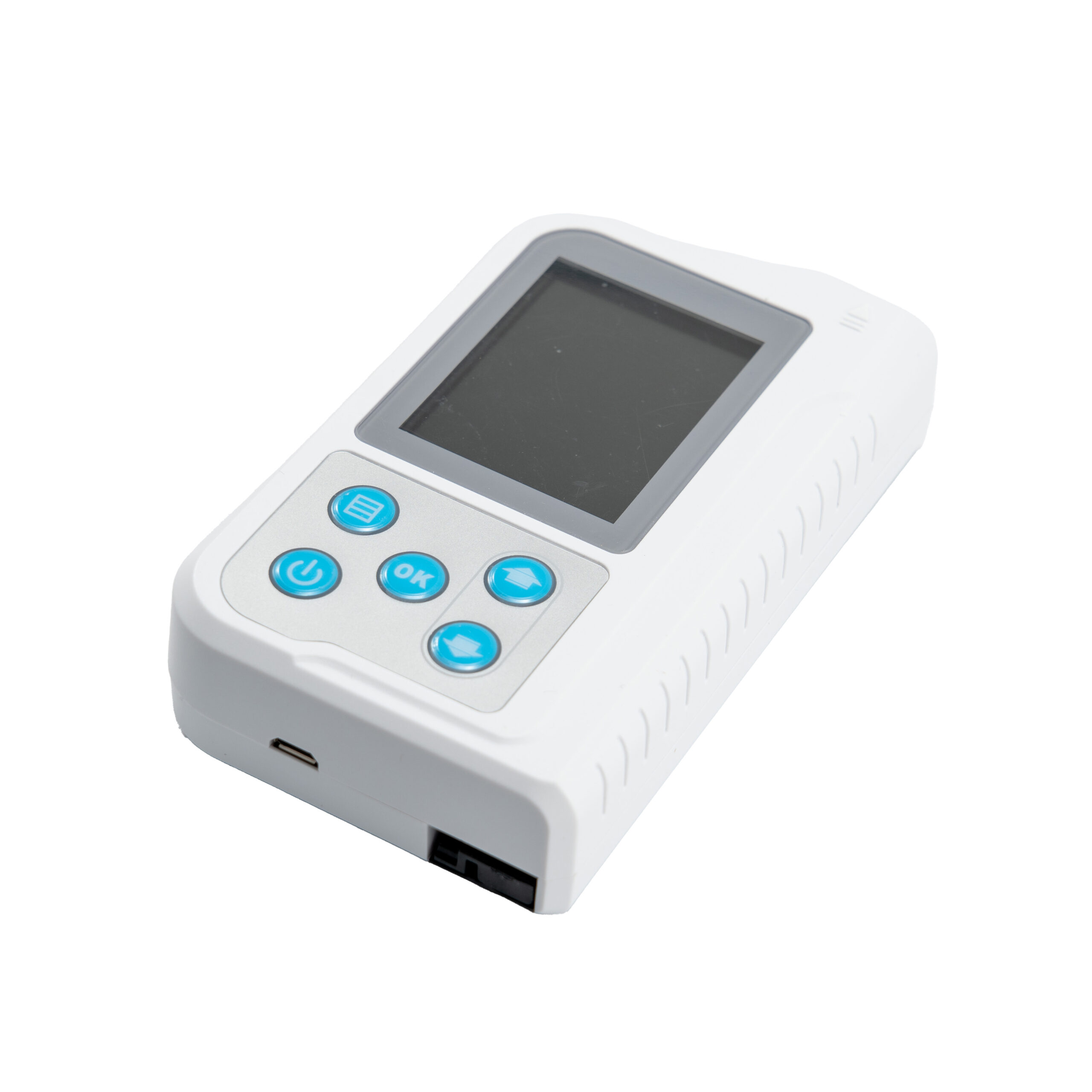
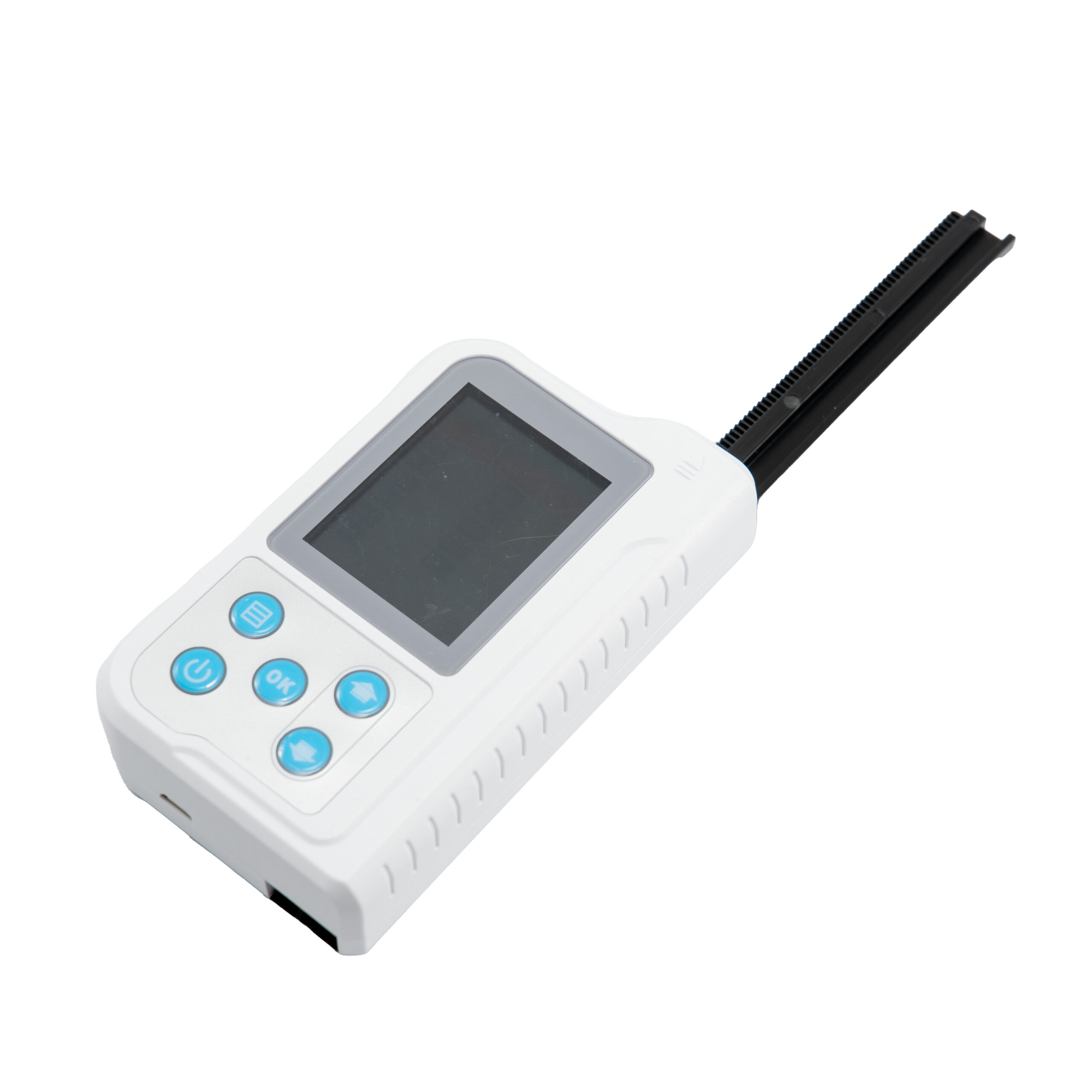
Contec BC401

A urine strip reveals urinary tract infection, diabetes, kidney or liver disease, but when read by eye against the scale on the box the result is imprecise and never recorded. Contec BC401 reads the strip optically within a minute and sends the values straight away. Measurement is episodic. The analyser evaluates 11 parameters, including leukocytes, nitrite, protein, blood and glucose, and is also compatible with 8–14-parameter strips. It is small, battery-powered and Bluetooth-enabled. Compared with UriTop Mini it is lighter and wireless; UriTop is the benchtop option for larger sample volumes. It suits any setting where urine is tested on site – hospital wards, clinics, residential and field services, home care.

What it measures and does

Photoelectric colorimetric reading of urine strips: glucose, bilirubin, specific gravity, ketones, blood, protein, urobilinogen, nitrite, leukocytes, ascorbic acid, pH (optionally microalbumin, creatinine, calcium). Throughput ≥60 tests/h, memory of 500 samples. Results are transferred via Bluetooth to PROFI-LOG and stored in the patient record.

Operator requirements
— Operated by a trained nurse or carer; interpretation is for the physician.
— Requires Contec test strips; the strip is dipped into the urine sample and inserted into the analyser.
— Powered by a built-in 3.7 V / 1,900 mAh Li-ion battery, micro-USB charging.
Certification

CE-marked in vitro diagnostic medical device.

Dimensions, weight

126 × 73.5 × 30 mm, approx. 180 g.

purchase 140 €rental 14 € / month
Consumables and operation
Urine analyser strips (200 pcs) 16 € / pack
Safety inspection after 2 years of operation 48 € / inspection
Spirometry lung function 1 devices
Handheld spirometer with Bluetooth for monitoring lung function

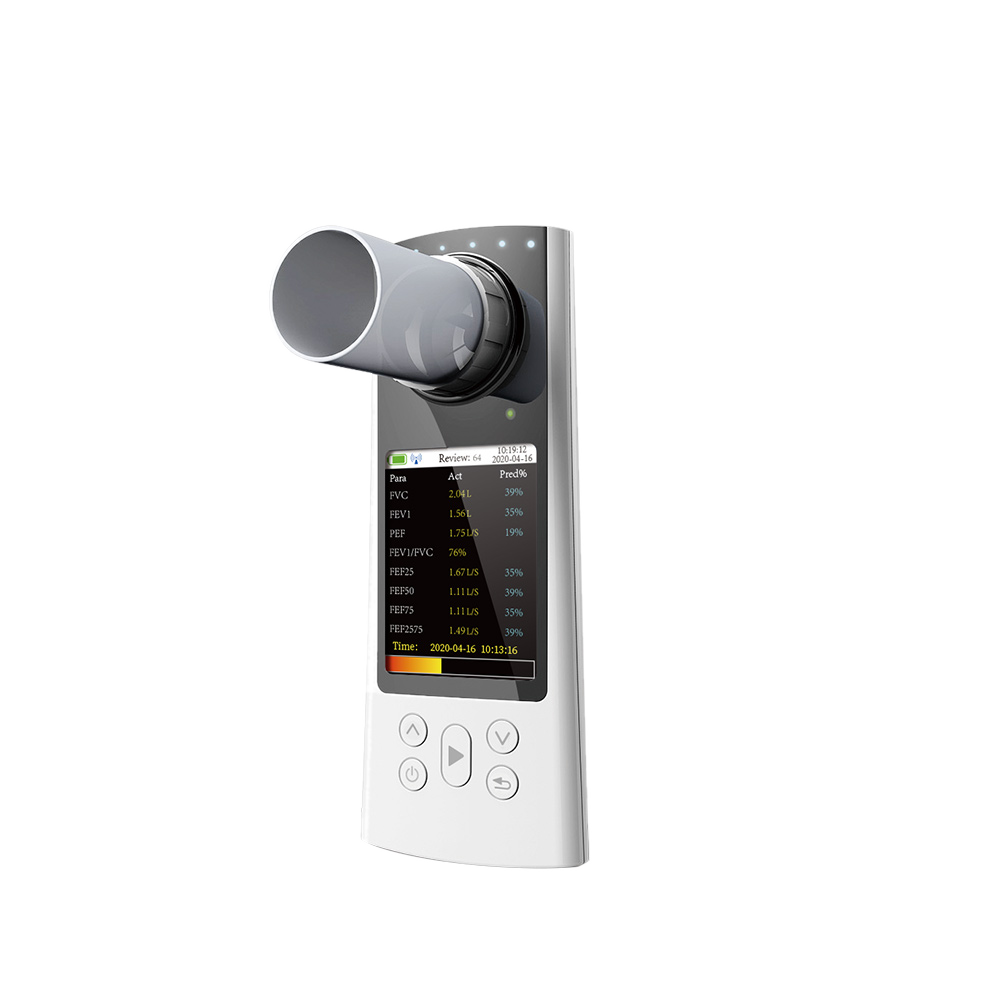
Spirometer SP80B

In patients with COPD, asthma or breathlessness, lung function needs to be measured repeatedly, not just once a year at the pulmonologist. Contec SP80B is a handheld spirometer to which the patient delivers everything needed in one forced exhalation: the device evaluates volumes and flows against the entered height, age and sex, displays the flow–volume curve and colour-codes the status. Measurement is episodic, started with one button. The test takes a few minutes and the result goes via Bluetooth straight into the record, so the physician can follow the trend remotely. It suits clinics and wards for regular checks, residential care and home monitoring of chronic patients.

What it measures and does

FVC, FEV1, FEV1/FVC, PEF, FEF25, FEF50, FEF75 and FEF25–75 by infrared flow sensing; volume 0–10 l (±3 %), flow 0–16 l/s (±5 %). Flow–volume and volume–time graphs, trend, calibration, 6 s exhalation indicator. Results are transferred via Bluetooth to PROFI-LOG and stored in the patient record.

Operator requirements
— Operated by a trained nurse; the patient must manage a forced exhalation as instructed.
— Requires disposable mouthpieces.
— Powered by a built-in rechargeable Li-ion battery, automatic power-off after 2 minutes of inactivity.
Certification

CE-marked medical device.

Dimensions, weight

160 × 65 × 45 mm, 190 g.

purchase 169 €rental 17 € / month
Consumables and operation
Mouthpieces (pack / 2 pcs) 3 € / pack
Diagnostic instruments stethoscope, otoscope 2 devices
Digital stethoscope for recording heart and lung sounds remotely

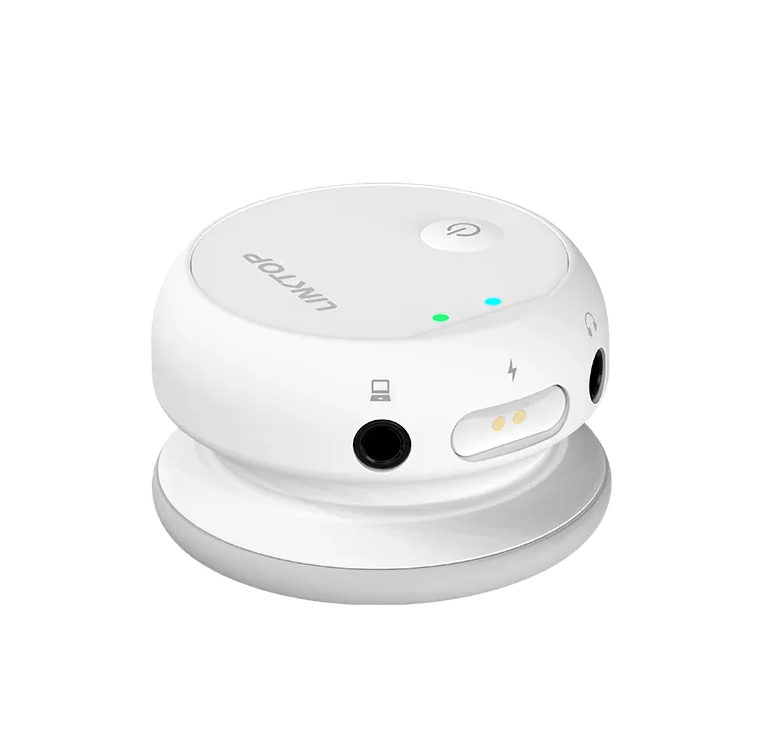
Electronic stethoscope HC-21

Listening to heart and lungs belongs to the physician, but the physician is not with the patient in residential care or at home. Linktop HC-21 is placed on the chest, amplifies the sounds, suppresses ambient noise and sends the recording via Bluetooth to the app, where the physician listens later or during a remote consultation. Measurement is episodic; recording starts automatically when placed on the body. The device has two modes – heart and lung sounds – and charges in one hour for 8 hours of use. It is intended for lay operation at home as well as for professionals. It suits any setting where auscultation must reach the physician without their physical presence.

What it measures and does

Recording of heart and lung sounds with electronic amplification and ambient noise suppression, in two modes (heart, lungs). The recording is transferred via Bluetooth to PROFI-LOG and stored in the patient record for the physician to listen to.

Operator requirements
— Operated by the patient or a carer; assessment is for the physician.
— The device is placed on bare chest skin as guided by the app, at rest and in quiet.
— Powered by a built-in battery, charged via magnetic USB cable in 1 h for 8 h of use.
Certification

CE-marked medical device.

purchase 212 €
Camera otoscope for ear examination with image transfer to the physician

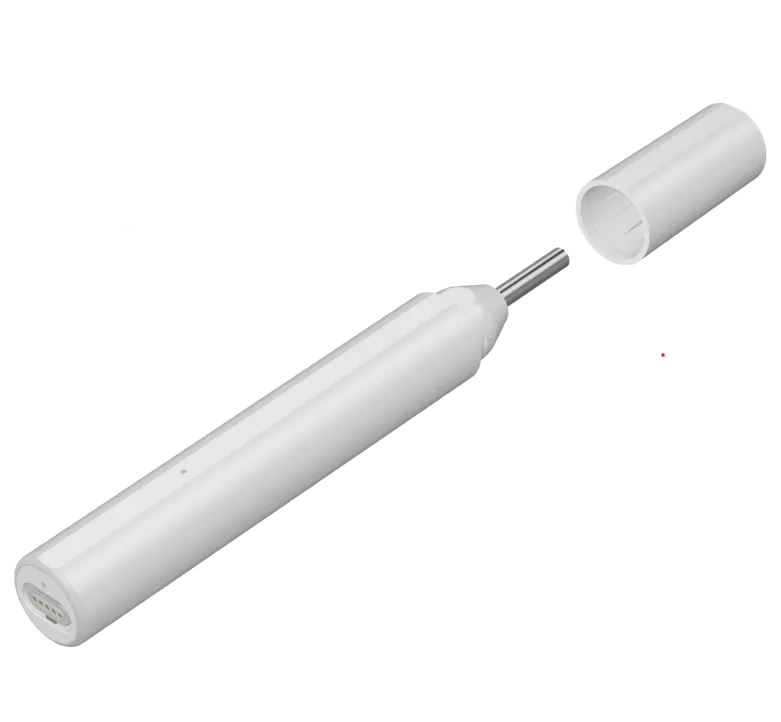
Digital otoscope NE20

Earache in a child or an elderly person means a trip to the doctor just to look into the ear canal. Linktop NE20 is a pen-shaped otoscope with an HD camera and six LEDs at the tip: it connects by cable to a phone, the image of the ear canal and eardrum appears in the app, and photos or video are saved for the physician. The examination is episodic. The device is light, waterproof for cleaning and charges in an hour for 90 minutes of work. The manufacturer intends it for adults and children from 3 years; an adult lay user can operate it. It suits residential care, field services and the home, where it saves a visit to the ENT or GP for a check.

What it measures and does

Image and video of the external ear canal and eardrum by a 720p HD camera (Ø 3.9 mm, focal length 1.5–2 cm, 70° field of view, 6 LEDs). Images are transferred via the connected phone to PROFI-LOG and stored in the patient record for the physician's assessment.

Operator requirements
— Operated by an adult lay user or a professional; assessment is for the physician.
— The otoscope connects via magnetic USB cable to an Android phone or iPhone and is introduced carefully into the ear canal; do not shine into the eyes.
— Powered by a built-in battery, charged in 1 h for 90 min of use.
Certification

CE-marked medical device, type BF applied part, IP22.

Dimensions, weight

Length 134.5 mm, diameter 17.8 mm, 24.5 g.

purchase 212 €
Body weight analytical scales 3 devices
Body composition scale with Bluetooth for tracking weight and body composition

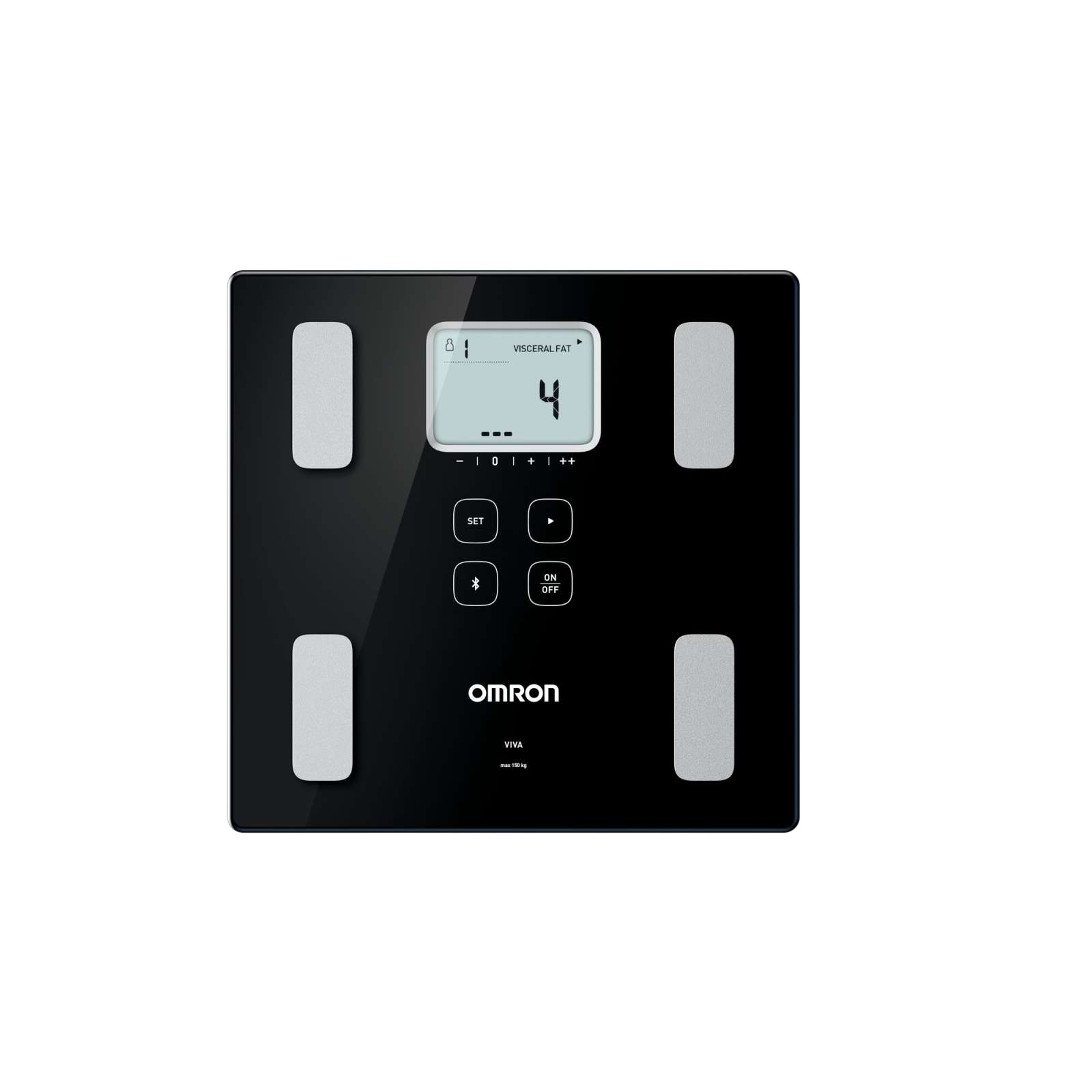
Omron VIVA scale

In seniors, patients with obesity, heart failure or on dialysis, occasional weighing is not enough – the trend matters, and the value must reach the record without transcription. Omron VIVA weighs the patient and, by bioimpedance analysis, determines body fat, visceral fat, skeletal muscle, resting metabolism and BMI. Measurement is episodic; the scale switches on when stepped on and sends results via Bluetooth. It is clinically validated against reference methods and recognises up to 4 users plus a guest. It suits clinics, residential and field services and the home – wherever weight and body composition are to reflect the course of a condition.

What it measures and does

Weight up to 150 kg, body fat, visceral fat, skeletal muscle, resting metabolism and BMI by bioelectrical impedance analysis (BIA). Memory of 30 readings, 4 users and guest mode. Results are transferred via Bluetooth to PROFI-LOG and stored in the patient record.

Operator requirements
— Operated by the patient alone; body composition should be interpreted by trained staff.
— Step barefoot onto the electrodes, at rest, preferably at the same time of day.
— Powered by 4 × AAA batteries.
Certification

CE-marked medical device, clinically validated.

Dimensions, weight

285 × 280 × 28 mm.

purchase 99 €rental 10 € / month
Column medical scale with height rod, verifiable, with WiFi transfer

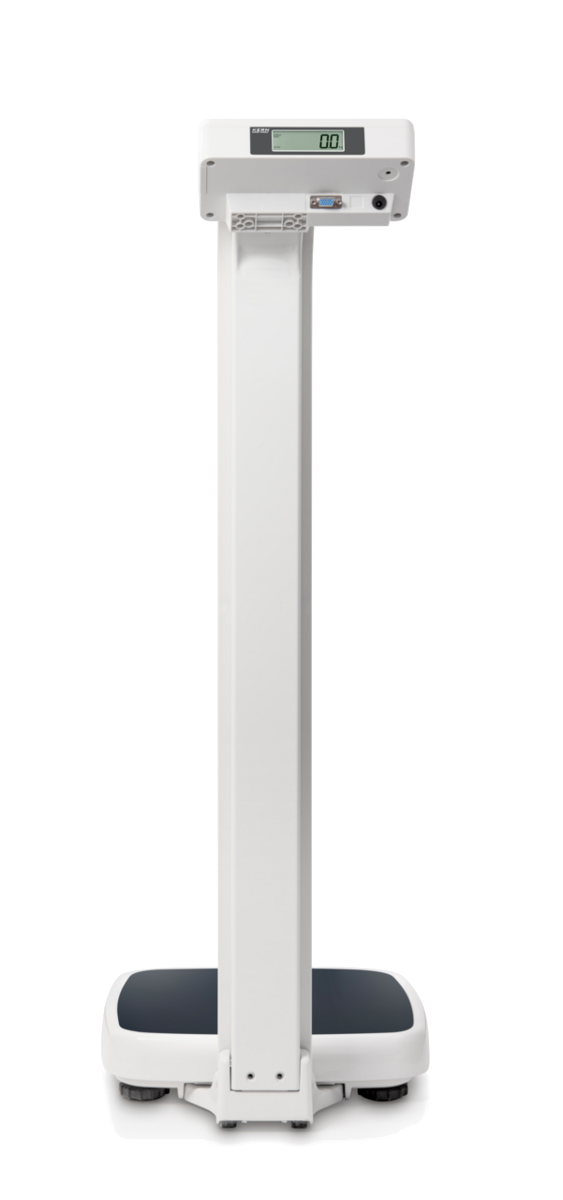
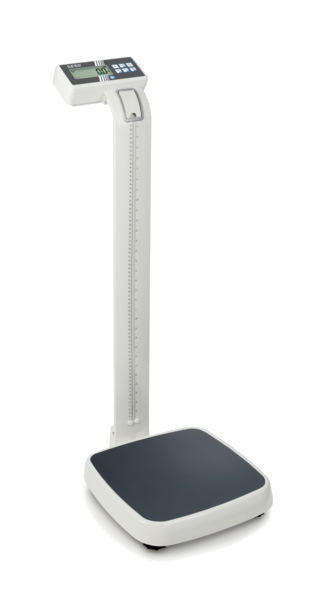
Personal scale MPN 200K-1HM

In the clinic and on the ward, a patient's weight must be measured with a verified instrument, and height is also needed to calculate BMI. The KERN MPN 200K-1HM combines both: a column scale up to 250 kg with 100 g readout, approved as a medical device under Regulation (EU) 2017/745 and verifiable in class III, and a height rod 89–205 cm that pulls out of the column. Measurement is a spot reading. The value is transferred via WiFi to PROFI-LOG without transcription. For patients who cannot stand still it has a Hold function; the parent–child function also weighs an infant held in the arms. Unlike the Omron VIVA and Soehnle Shape Sense Connect 200 it does not measure body composition, but unlike them it is officially verifiable and has a height rod and a large non-slip platform. It is suited to clinics, hospital wards and residential care; it has transport wheels for moving between rooms.

What it measures and does

Weight up to 250 kg with 100 g readout, height 89–205 cm with the height rod, BMI calculation. Hold function (stabilises the value for a restless patient) and parent–child function. Transfer of the measured value via WiFi to PROFI-LOG; optionally RS-232, Bluetooth and USB. Alibi memory per 2014/31/EU.

Operator requirements
— Manageable by a nurse or carer: the patient steps on the platform, the value settles and is sent.
— Powered by a mains adapter or battery (20 h, with rechargeable battery 80 h).
— Adjustable rubber feet, transport wheels.
Certification

Medical device approved under Regulation (EU) 2017/745, verifiable in class III (verification optional).

Dimensions, weight

Platform 365 × 360 × 80 mm, scale weight 11.56 kg.

Glass body-composition scale with Bluetooth for home monitoring

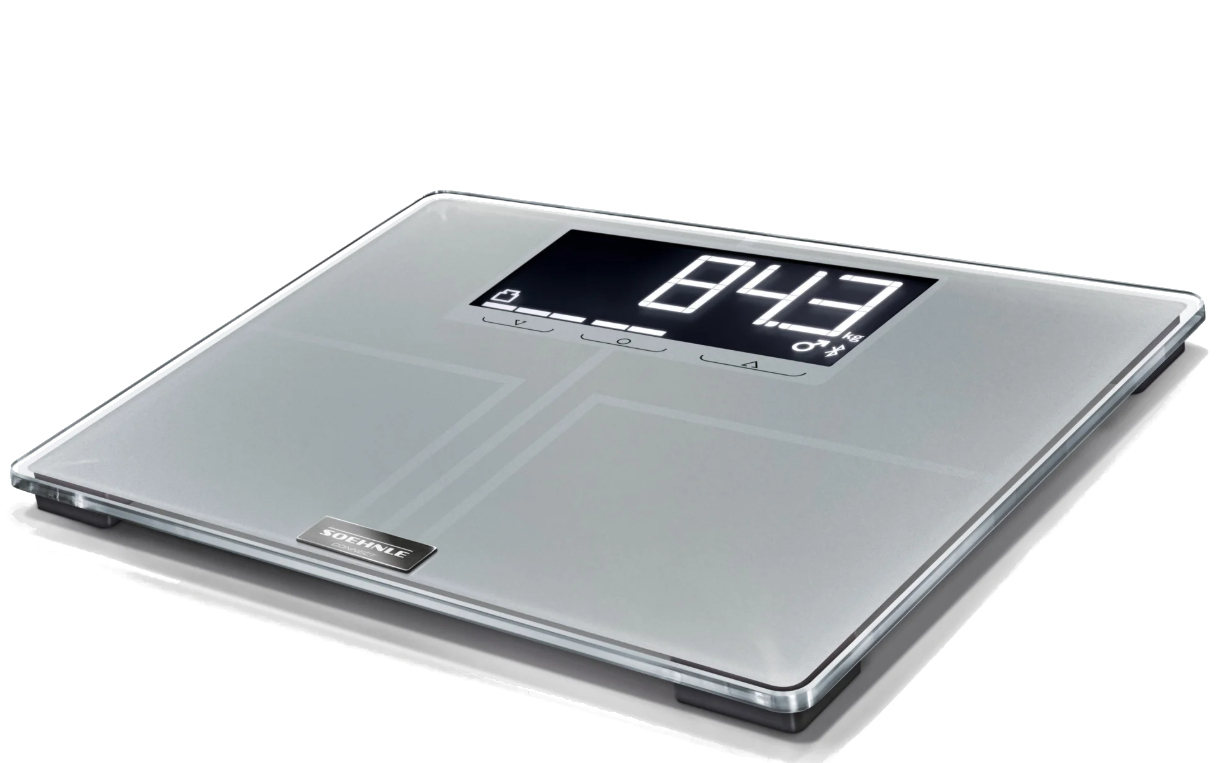
Shape Sense Connect 200

A patient at home should monitor their weight regularly, but writing values down by hand fails, and weight alone does not tell whether fat, water or muscle is increasing. The Shape Sense Connect 200 is a personal scale up to 200 kg with 100 g graduation that, using bioimpedance analysis (BIA), measures body fat, water and muscle share in addition to weight and sends the result via Bluetooth to PROFI-LOG. Measurement is a spot reading – just step on the scale; it switches on by itself and recognises up to 8 users. The large white LED display with 4.5 cm digits is legible even for seniors. Unlike the KERN MPN 200K-1HM it is not an officially verifiable medical device and has no height rod – it is a consumer home scale; compared with the Omron VIVA it is an alternative with the same BIA principle and a low glass platform. It is suited to patients at home, field care and residential care for daily weight checks, for example in heart failure.

What it measures and does

Weight up to 200 kg with 100 g graduation; by bioimpedance analysis body fat, body water and muscle share, BMI, daily calorie requirement and activity level. Automatic recognition of up to 8 users. Transfer of results via Bluetooth 4.0 to PROFI-LOG.

Operator requirements
— Manageable by the patient alone: step barefoot on the platform, the scale switches on and off automatically.
— Powered by 3 × AAA batteries (included).
— Anti-slip feet, safety glass.
— For BIA the user must stand barefoot on the electrodes.
Certification

Consumer scale, not a medical device.

Dimensions, weight

30.0 × 35.0 × 2.6 cm.

Environment and safety in preparation 5 devices
Room CO₂, temperature and humidity monitor with stale-air alert

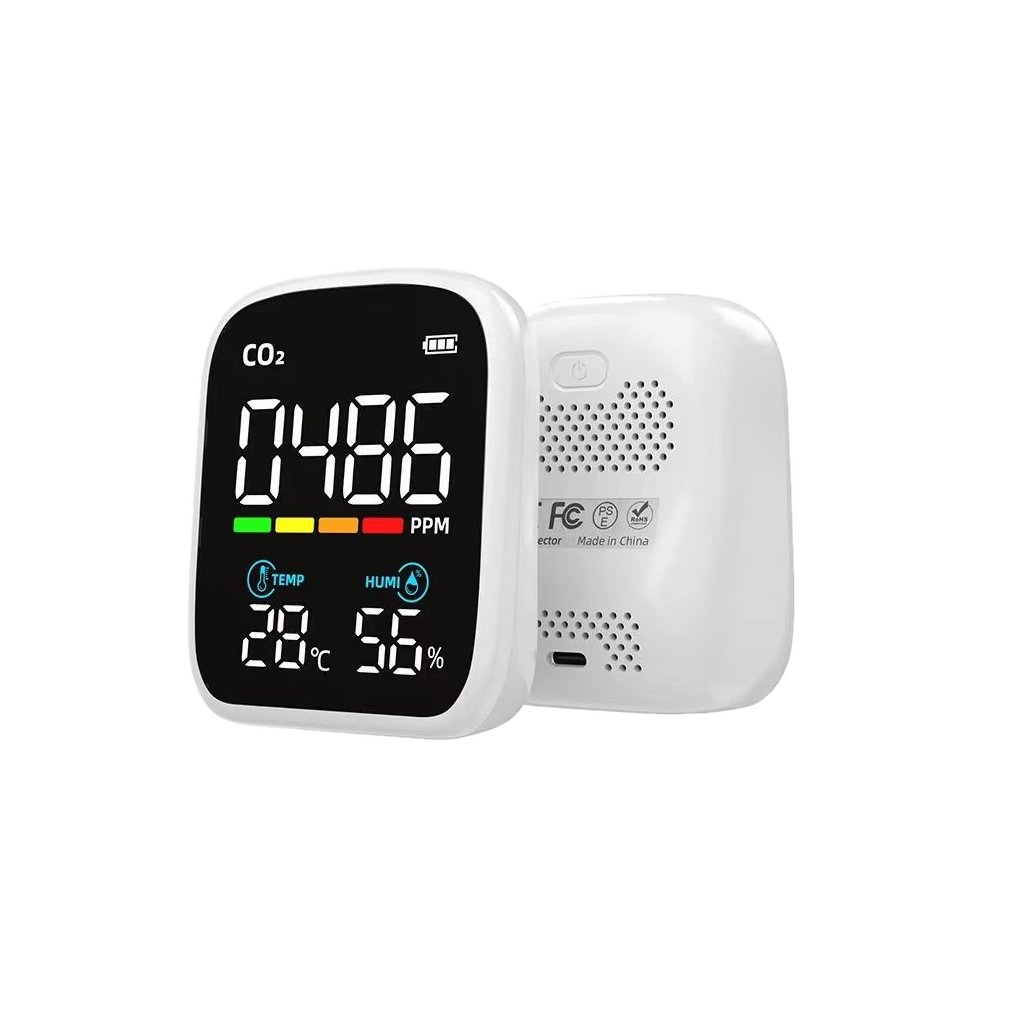
Urban digital CO2 Wi-Fi monitor

Stale air in a senior's room or a hospital room shows as fatigue, headache and poorer sleep before anyone notices. The Urban CO₂ monitor measures carbon dioxide with an NDIR sensor together with temperature and humidity, shows the values on its display and sends an alarm when the safe limit is exceeded. Monitoring is continuous. The device has a built-in battery, so it can be moved between rooms, and connects via Wi-Fi. It is a simple environmental add-on unrelated to health measurements – it gives staff a reason to open a window or adjust ventilation before clients' condition worsens. It suits rooms in residential care, wards and homes.

What it measures and does

Continuous measurement of CO₂ concentration (400–5,000 ppm, ±(50 ppm + 5 %)), temperature (0–50 °C, ±1 °C) and relative humidity (0–99 %, ±5 %) by NDIR sensor, with an alarm when the limit is exceeded. Values are transferred automatically to PROFI-LOG into the room record.

Operator requirements
— No operation needed; staff place the device in the room away from people's direct breath and connect it to Wi-Fi.
— Manual or automatic CO₂ calibration.
— Powered by a built-in 1,200 mAh battery (approx. 23 h) or USB-C.
Certification

Not a medical device.

Dimensions, weight

70 × 90 × 35 mm.

purchase 71 €rental 8 € / month
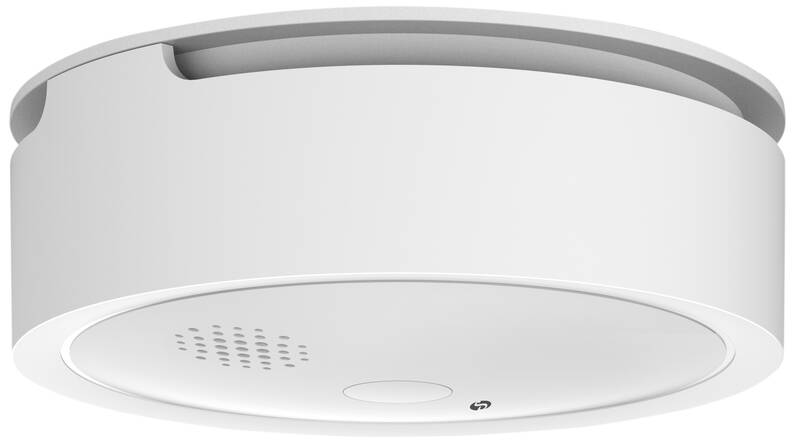
Wi-Fi smoke detector with a five-year battery and smart-home integration

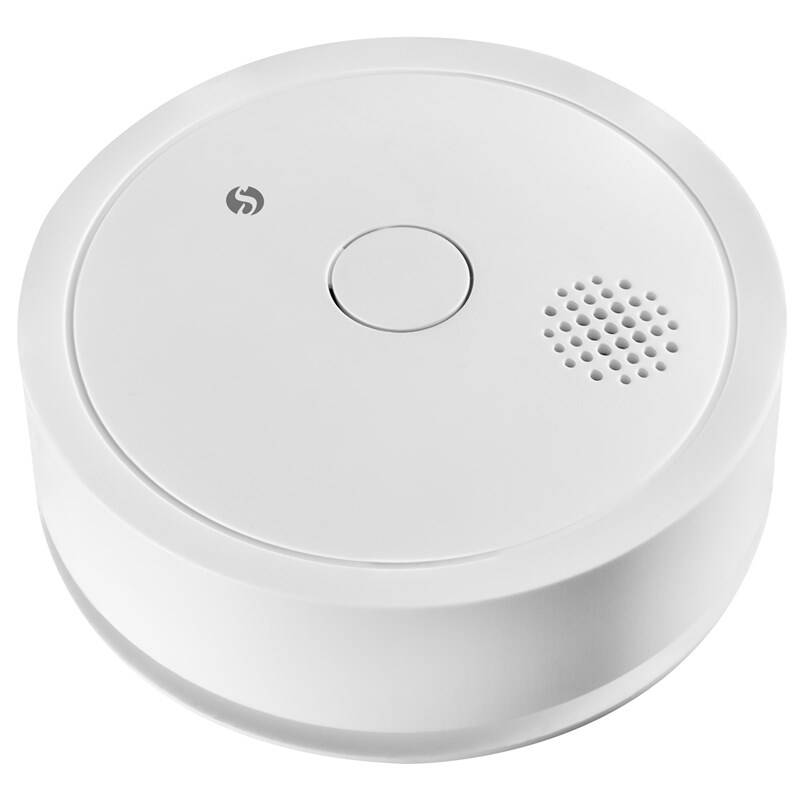
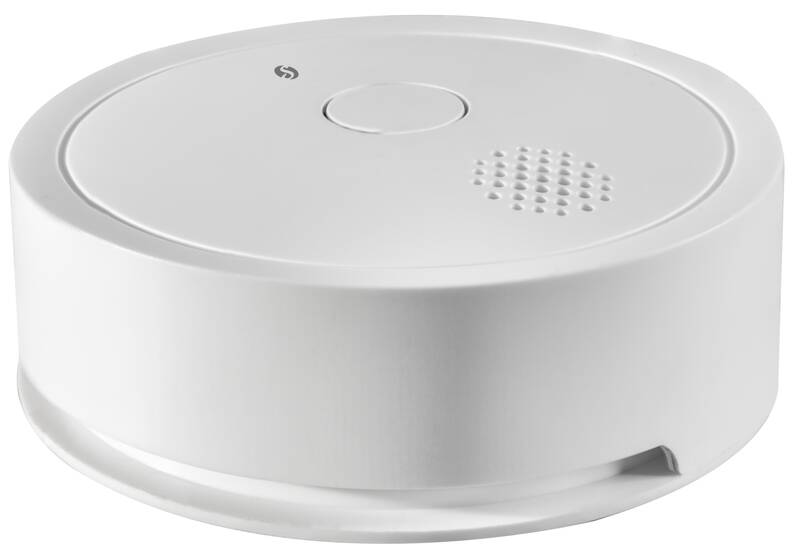
ShellySmoke

A smoke detector in a client's room must be reliable for years without maintenance, and its alarm must reach staff, not just the room. Shelly Plus Smoke detects smoke photoelectrically, sounds a siren and sends an alert via Wi-Fi to the app; a single lithium battery lasts up to 5 years. Monitoring is continuous. One button serves for testing and for hushing a false alarm; a low battery is signalled by flashing and sound. Unlike EMOS GoSmart it has a longer battery life, Bluetooth for setup and an open interface for connecting to other systems; EMOS is the cheaper variant with ordinary batteries. It suits rooms in residential care, seniors' flats and wards where detectors are installed in larger numbers.

What it measures and does

Continuous photoelectric smoke detection with siren and low-battery signalling; alerts via 2.4 GHz Wi-Fi to the Shelly Smart Control app, Bluetooth 4.2 for setup. Alarms are transferred automatically to PROFI-LOG into the room record.

Operator requirements
— No operation needed; staff mount the detector on the ceiling, pair it with the app and test it occasionally by holding the button for 3 s.
— Powered by 1 × CR123A battery, life up to 5 years; operating temperature 0–55 °C.
Certification

Electrical CE certification; detector per DIN EN 14604. Not a medical device.

Dimensions, weight

86 × 86 × 31 mm, 95 g without battery.

purchase 42 €rental 5 € / month
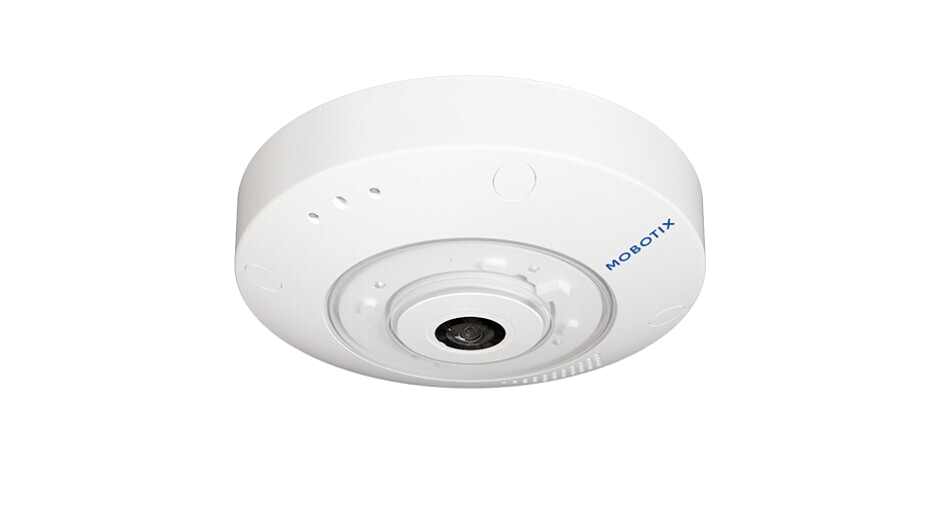
Ceiling-mounted AI sensor that reports falls and bed exits in real time

c71 Kepler NurseAssist (AI camera/sensor)

A patient's fall in the room is often only discovered on the next round, and nobody notices a disoriented patient leaving the bed. The c71 NurseAssist is a ceiling-mounted optical sensor with 360° coverage and built-in Kepler Vision image analysis that evaluates the situation in the device itself and immediately alerts staff. Monitoring is continuous. Privacy is protected by event-controlled obscuring of live and recorded images and dynamic masking of the person in bed; the microphone and speaker are disabled by default and enabled only by an administrator. Unlike the AltumView Sentinare 3 sensor it is a ceiling 360° camera powered over the network (PoE) with documented integrations to nurse call systems. It is suited to hospital wards and residential care.

What it measures and does

Detects a fall (person down), person in bed and out of bed, and automatically localises the bed. With the extension licence it also detects sitting on the bed edge, leaving and entering the room, entering the bathroom and bed not recognised. Events are passed to the nurse call system and to PROFI-LOG (HTTP(S), MQTT, ONVIF). 4K image (2144 × 2144), hemispheric lens, 850 nm IR illumination for night operation.

Operator requirements
— Installed by a technician: ceiling mounting at 2.0–3.5 m, power and data over a single PoE Plus cable (802.3at, class 4), consumption 14.5–16 W.
— Staff then only respond to alerts; the patient operates nothing.
— Operating temperature −10 to +50 °C.
Certification

Not a medical device. Certifications include EN 62368-1, EN 55032, EN 55035, EN 61000-6. GDPR-compliant operation through event-controlled image obscuring.

Dimensions, weight

Ø 164 × 47.5 mm; net weight 765 g. Housing aluminium/PBT-30GF.

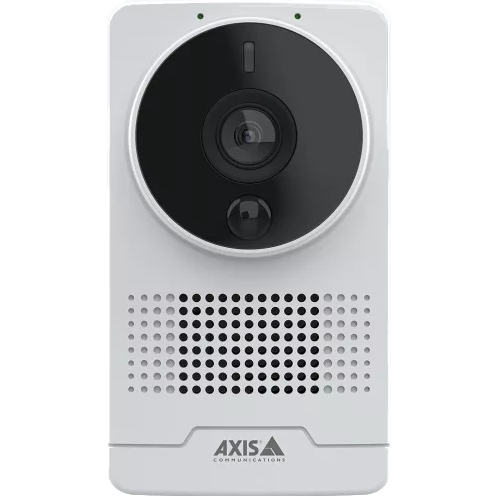
Compact IP camera with two-way audio and night vision

Axis M1075-l (camera)

Staff cannot be in the room all the time, and when a sensor or the patient raises an alert they need to see quickly what is happening and talk to the patient. The AXIS M1075-L is a small indoor camera with Full HD video, infrared illumination to 18 m for darkness, and a built-in microphone and speaker for two-way conversation. Monitoring is continuous; a single cable (PoE) provides both network and power. A passive infrared (PIR) sensor detects movement even in total darkness and triggers recording or an alert. Unlike the ceiling-mounted MOBOTIX c71 NurseAssist sensor it does not evaluate falls but gives staff a live image and voice contact; unlike the SAFR SC200-RF camera it is not for identifying people but for supervision. It is suited to hospital wards and residential care for supervising at-risk patients.

What it measures and does

Full HD video 1920 × 1080 at up to 25/30 fps (H.264, H.265, Motion JPEG), 3.16 mm lens with 103° × 55° field of view, day/night with 850 nm IR up to 18 m. Two-way audio (microphone, 74 dB SPL speaker), PIR motion sensor to 7 m, alarm input/output. On-camera analytics: detection of people and vehicles, line crossing, object in area, privacy masking. Integration via ONVIF and SIP with PROFI-LOG.

Operator requirements
— Installed by a technician: wall mounting (mount included), connection via PoE cable (802.3af/at, typically 5.4 W).
— Staff watch the image in the system; the patient operates nothing.
— Operating temperature 0–35 °C; indoor use.
Certification

Not a medical device. EMC per EN 55032 Class A, EN 55035, EN 61000-6-1/-2. Security features: signed OS, secure boot, Secure Element (CC EAL6+).

Dimensions, weight

105 × 60 × 93 mm, 153 g. Aluminium and plastic casing, white.

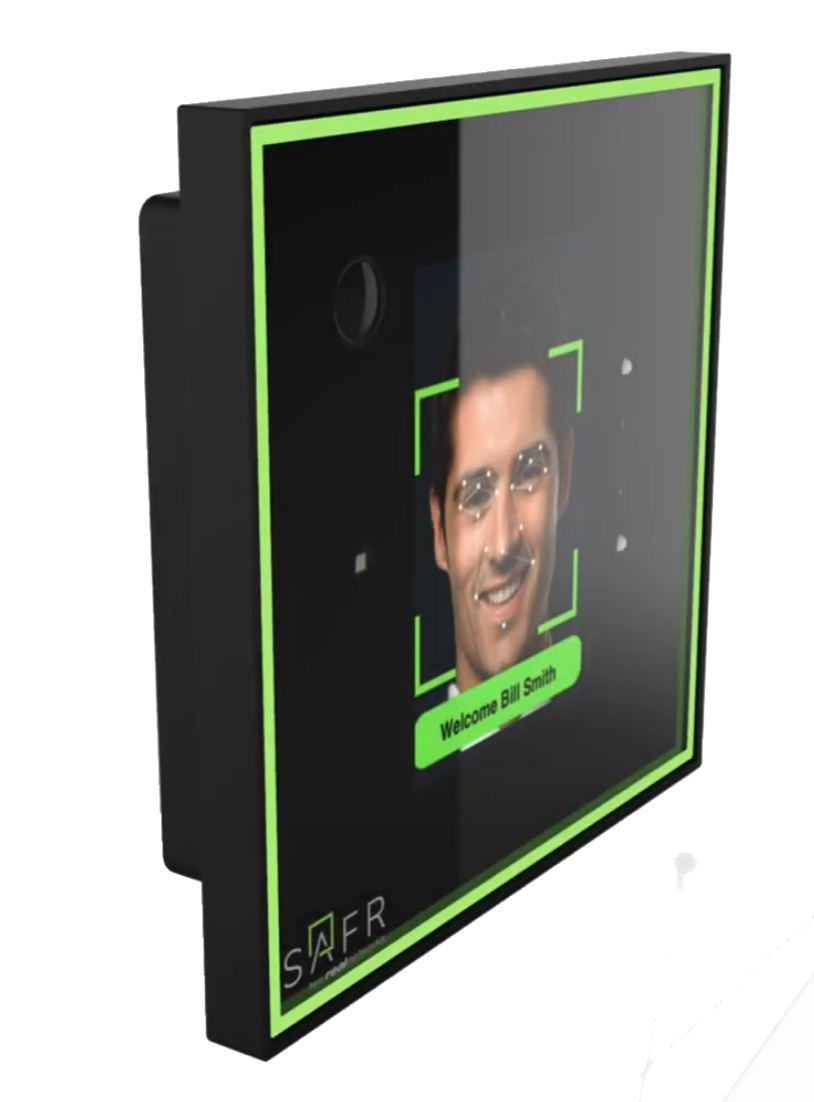
Door terminal that opens by face or card

SC200-RF (face recognition camera)

On a ward with disoriented patients or in a medication store it is necessary to control who passes through the door, and keys and cards get lost and lent. The SAFR SCAN SC200-RF is an access control reader that recognises the face and opens the door without touch; the RF variant also reads contactless cards (NFC, ISO 14443/15693, MIFARE, DESFire, HID iClass and others), so the face can be combined with a card or phone as a second factor. 3D structured light and RGB liveness detection protect against photo spoofing. Unlike the AXIS M1075-L camera it is not for supervision but for entry control; unlike the MOBOTIX c71 NurseAssist sensor it does not watch the room but the door. The manufacturer intends it for indoor and outdoor mounting; it is suited to hospital wards and residential care.

What it measures and does

Face recognition with a capacity of up to 50,000 users, false acceptance rate (FAR) down to 0.0001%, recognition with a face mask, tailgating detection. NFC/RFID card reader and mobile credential via BLE; combinations face + card, face + code, face + mobile. Connection to the access control system via Wiegand, OSDP, TTL and relay; events to PROFI-LOG over the network.

Operator requirements
— Installed by a technician: mounting on a junction box, PoE power (802.3af, class 3, 13 W) or 12 V DC, Wiegand/OSDP/relay outputs to the control panel.
— The user just glances at the 3.5" touch display.
— Operation −20 to +60 °C, IP65 rated, IK08 impact resistance.
Certification

Not a medical device. Certifications FCC, RoHS; IEC 62599-1/-2. The manufacturer declares GDPR compliance.

Dimensions, weight

14 × 14 × 3.1 cm, 450 g. Aluminium and chemically strengthened glass, black.